
Comprehensive How-To Plan For Engaging Localized Content Marketing

Creating a Local Flavor: The Case for Localization
Localization goes beyond mere translation; it’s about weaving local culture and sentiment into your content. For instance, Starbucks successfully adapts its menu to reflect local preferences—offering a matcha latte in Japan, while in Mexico, you might find a sweet horchata version. Such tailored offerings create a sense of belonging among customers, encouraging loyalty and engagement. A study showed that businesses that localize their content can see a conversion rate increase of up to 25% in new markets. By embracing the unique characteristics of your audience, you foster deeper connections that drive brand affinity and ultimately, sales.
Key Takeaways:
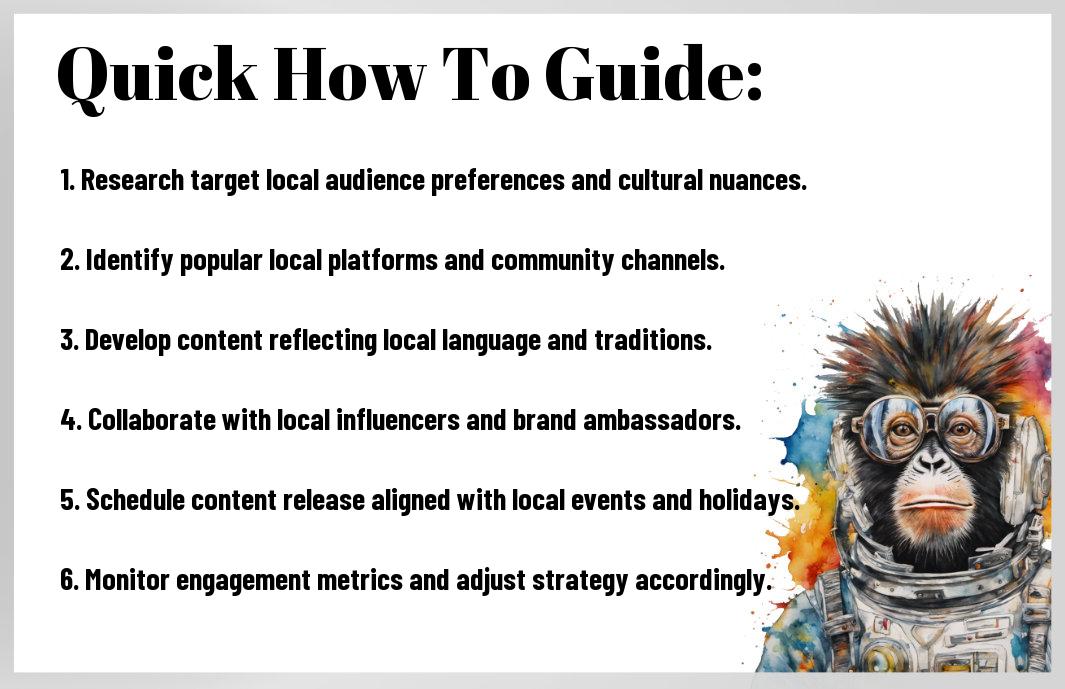
- Identify and understand the local audience by conducting thorough market research, which helps tailor content strategies to meet specific regional preferences and cultural nuances.
- Utilize local influencers and community leaders to amplify message reach and credibility, fostering stronger connections within the community.
- Consistently analyze performance metrics and feedback to refine and adjust content marketing strategies, ensuring ongoing relevance and engagement with the local audience.
Uncovering Your Target Audience’s Unique Needs
Understanding the specific needs of your audience is paramount in creating engaging localized content. Tailoring your marketing efforts to respond to these unique needs can significantly enhance customer relationships and drive conversions. This involves not merely identifying demographic information but delving deeply into the aspirations, pain points, and cultural nuances that define your audience’s identity. By adopting a more profound approach, such as analyzing local trends and customer feedback, you can create content that resonates effectively and builds lasting connections.
Conducting In-Depth Audience Research
Leveraging various research methods enables you to gather valuable insights about your audience. Utilize surveys, focus groups, and social media analytics to capture necessary data on local preferences and behaviors. Pay attention to local forums and online communities to gauge discussions around your industry. This comprehensive audience research helps uncover the motivators behind local purchasing decisions, leading to more targeted and relevant content.
Building Personas That Resonate Locally
Creating localized personas involves more than just collecting data; it’s about weaving together qualitative and quantitative insights to forge realistic, relatable characters that embody your audience’s diverse attributes. These personas should reflect local demographics, values, and buying habits. For instance, if your community highly values environmental sustainability, your persona should encompass that ethos, presenting a holistic view of how your product or service fulfills local aspirations.
To effectively build these personas, start by clustering your findings into segments that highlight shared characteristics within your audience. For example, identifying a segment of young professionals who prioritize work-life balance can lead you to craft distinct messaging that appeals specifically to their lifestyle. Integrate local vernacular, regional focuses, and prevalent cultural references into these personas to enhance relatability. Personalizing your marketing messages based on these personas demonstrates genuine understanding and strengthens your connection with the community, ultimately leading to higher engagement and loyalty.
Crafting Compelling Content with Local Relevance
Creating content that resonates with your local audience requires a deep understanding of their values, interests, and preferences. Focus on utilizing relatable language, local dialects, and culturally relevant themes to establish an authentic connection. You can discover more about developing a tailored approach in How to Create a Content Localization Strategy for …
Tapping into Cultural Narratives and Local Trends
Engaging with cultural narratives and current local trends positions your content within the framework of your audience’s daily lives. By referencing local events, societal issues, or regional customs, you create a sense of familiarity and trust. For instance, if a popular festival occurs in your area, create content that aligns your brand with the excitement around that event.
Leveraging Local Influencers for Authenticity
Bringing local influencers into your content strategy adds authenticity and relatability. Local figures resonate more with your audience because they share similar backgrounds and experiences. Collaborating with influencers not only enhances your brand’s credibility but also helps you tap into their established follower bases, amplifying your message.
Consider partnering with influencers whose personal brands align with your values. For example, a local food blogger can showcase your restaurant’s offerings while sharing delicious experiences. You can also invite influencers to participate in events, creating visually engaging content that they can share with their audience. This approach fosters organic engagement and nurtures community relationships, ensuring your content remains visible and relevant.
Strategic Distribution: Where Local Audiences Engage
The effectiveness of your localized content marketing hinges on strategically distributing your content where your local audience actively engages. Identifying the right channels can amplify your reach and foster deeper connections with potential customers. Local social media groups, community forums, and local publications can serve as excellent platforms to share your content, while also considering the cultural nuances that resonate in these spaces. Your success will stem from understanding where your audience spends their time and how to curate your content for each venue.
Identifying the Right Platforms for Your Local Market
Exploring the unique landscape of your local market reveals the platforms that resonate most with your audience. Localized social media accounts, neighborhood Facebook groups, and community bulletin boards are hotspots where your target demographic interacts. Engaging with micro-influencers who have established trust within your community also provides a powerful channel to reach local consumers effectively.
Timing Your Messages for Maximum Impact
To amplify your content’s effectiveness, timing your messages is vital. Data shows that local audiences have peak engagement periods, often aligning with community events, local holidays, or even specific times of the day. For instance, promoting your content the week before a regional festival can grant you greater visibility and interaction, while ensuring that your messages align with the audience’s routine enhances the likelihood of engagement.
Consider analyzing engagement metrics to determine the best times for your messages. If your target audience is primarily working professionals, early mornings or lunchtime might yield better visibility. According to a study by Sprout Social, posts made during the week, particularly on Wednesdays and Thursdays, saw higher engagement rates. Align your messages with local happenings or cultural events as well to create a sense of urgency and relevance, speaking directly to your audience’s current interests and emotions.
Measuring Success: Metrics for Localized Content
Understanding the effectiveness of your localized content strategy hinges on robust metrics. Regularly assessing engagement results helps you fine-tune your approach and maximize the impact of your campaigns. Focus on specific metrics such as reach, engagement rates, conversion rates, and audience retention to evaluate how well your content resonates with the target local audience.
Key Performance Indicators for Engagement
Tracking key performance indicators (KPIs) allows you to monitor how effectively your localized content engages your audience. Metrics such as social media shares, comments, likes, and click-through rates provide insight into viewer interest and interaction. Additionally, monitoring the average time spent on your content can indicate whether it’s delivering the value your audience seeks. Prioritizing these KPIs will empower you to make data-driven adjustments for better engagement outcomes.
Analyzing Feedback to Enhance Future Campaigns
Harnessing feedback is pivotal for optimizing your content marketing initiatives. Use qualitative and quantitative data from various sources, including social media comments, surveys, and website analytics, to gain insights into audience preferences. Engaging directly with your audience through polls or focus groups can provide further clarity on their needs, allowing you to adjust future campaigns accordingly.
Appreciating the nuances of your audience’s feedback can lead to greater success in future campaigns. For example, if you notice a consistent preference for certain topics or formats (like videos over articles), you can prioritize these in your upcoming content. Additionally, assessing user sentiments—whether positive or negative—enables you to hone in on aspects your audience values or dislikes. Leverage this valuable information to strengthen connections and establish a more responsive content strategy, ultimately driving better results and fostering brand loyalty within the local market.
Navigating Challenges: Common Pitfalls in Local Content
Local content marketing presents unique challenges that can impede your success. Neglecting to conduct thorough market research, for instance, may lead to a disconnect between your offerings and the needs or interests of your target audience. Failing to adapt messaging for cultural sensibilities can further alienate potential customers, making it important to know potential pitfalls to avoid.
Overcoming Language and Cultural Barriers
Language misinterpretations and cultural misunderstandings can create significant obstacles for localization. Engaging a native speaker to refine your content ensures linguistic accuracy, while cultural insights inform you of local customs and preferences. Tailoring your message not only enhances relatability but also fosters a deeper connection with your audience.
Maintaining Brand Consistency Across Local Markets
Striking the right balance between localization and brand consistency can be challenging yet vital. Ensure your brand messaging aligns with local expectations while remaining true to your core identity. Recognize that logos, color schemes, and promotional themes might need adjustments; however, your underlying values and mission should remain constant across various markets. This holistic approach strengthens your brand image, builds trust, and ensures that consumers across different regions recognize your brand as one they can relate to and depend on.
Conclusion
Drawing together your strategies for localized content marketing ensures you effectively connect with your audience on a personal level. By understanding local preferences, utilizing targeted keywords, and delivering culturally relevant content, you can significantly enhance engagement and brand loyalty. Implement these insights to not only reach but resonate with your community, driving meaningful interactions and stronger relationships. Ultimately, your commitment to localized marketing will distinguish your brand and foster sustained growth in your market.
FAQ
Q: What are the key steps to develop a localized content marketing strategy?
A: Developing a localized content marketing strategy involves several key steps: First, conduct thorough market research to understand the cultural preferences and behaviors of your target audience in the specific locale. Next, create buyer personas that reflect the demographics and psychographics of these local consumers. Then, tailor your content to address the interests and concerns of your audience, ensuring it resonates with local customs and vernacular. Following this, choose appropriate channels for distribution, such as social media platforms that are popular in the region. Finally, continuously analyze performance metrics and adapt your strategy based on feedback and engagement data to optimize your efforts over time.
Q: How important is it to use local language and dialect in content marketing?
A: Using local language and dialect in content marketing is crucial for building trust and establishing a connection with your audience. When consumers see content written in their mother tongue or familiar dialects, they are more likely to feel understood and valued. This not only enhances engagement but also improves the likelihood of sharing your content within their communities. Furthermore, localized language helps avoid misunderstandings and cultural embarrassments that can arise from poorly translated content. Therefore, hiring local content creators or using native speakers can enhance authenticity and relatability in your messaging.
Q: What metrics should I track to evaluate the success of my localized content marketing efforts?
A: To evaluate the success of your localized content marketing, track various metrics that align with your specific goals. Key performance indicators (KPIs) to consider include engagement rates, such as likes, shares, and comments on social media platforms. Monitor traffic sources to your website and track how localized content impacts visitor behavior, including time spent on pages and bounce rates. Conversion rates, such as subscriptions or purchases attributed to localized campaigns, are also vital. Lastly, use sentiment analysis to gauge audience feedback and perception towards your localized content, as this can provide qualitative insights into its effectiveness.
Search Here
About us

Talisman Marketing
Casting spells and implementing magic on your marketing plans since 2011
Magic Marketing
Services
Testimonial

"Quality Service"
Always accessible with quality service. Big thanks to Talisman Consulting!
Jeff Ball
Think Local
Gallery


