
Practical How-To Steps For Optimizing Localized Content Marketing Efforts

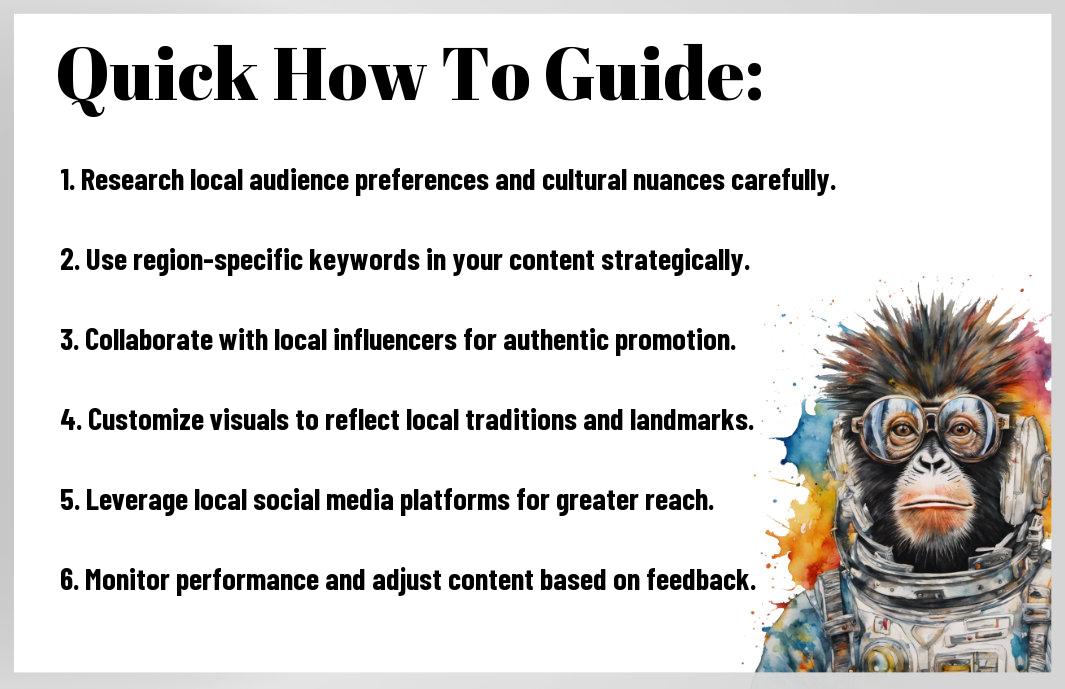
Over the course of your content marketing journey, you may encounter challenges in reaching your local audience effectively. To enhance your efforts, it’s important to follow practical steps tailored for localized content. This guide will provide you with actionable strategies to optimize your content, ensuring it resonates with your community and drives engagement. By incorporating these techniques, you’ll not only improve your visibility but also build trust within your local market, leading to increased conversions and brand loyalty.
Key Takeaways:
- Conduct thorough research on local audience preferences and cultural nuances to tailor your content effectively.
- Utilize location-specific keywords and phrases in your content to enhance visibility in local search results.
- Engage with local communities through social media and partnerships to build credibility and increase brand awareness.
Decoding Local Audience Needs
Understanding local audience needs requires a thoughtful analysis of the unique characteristics and preferences that define your target market. By submerging into demographic metrics, such as age, gender, income level, and location, you can gain insights that help tailor your content. Additionally, exploring psychographic factors—interests, values, and lifestyles—gives you a broader perspective on what resonates with your audience. Engaging with local communities and leveraging customer feedback also plays a pivotal role in shaping content that truly reflects the desires and expectations of your audience.
Analyzing Demographics and Psychographics
Examining both demographics and psychographics of your audience reveals trends that can inform content creation. For instance, if your target market consists predominantly of young professionals, you’ll want to highlight convenience and innovation in your messaging. Conversely, if you cater to families, focusing on community involvement and safety will likely be more effective. This combined analysis equips you with the insights necessary to craft targeted messages that directly align with the values and needs of your audience.
Conducting Localized Keyword Research
Prioritize localized keyword research to discover the phrases and terms your audience is using when seeking out products or services in their area. Utilize tools like Google Keyword Planner or Ubersuggest to uncover regional keywords, taking note of search volume and competition. Local keywords often include geographic identifiers, such as city or neighborhood names. For example, if you operate a bakery in Austin, phrases like “best cinnamon rolls in Austin” may yield better results than a more generic term like “cinnamon rolls.” Additionally, analyzing search intent behind these keywords allows you to create content that addresses specific local queries, boosting your visibility and relevance in search results.
When conducting keyword research, focus on long-tail keywords that include local qualifiers. These often capture higher intent from users actively seeking solutions in your industry. For instance, instead of targeting broader terms like “plumbing services,” refining your keyword strategy to “emergency plumbing services in [your neighborhood]” can significantly enhance your chances of connecting with local customers. Furthermore, tapping into local trends can reveal emerging topics or products that the community is interested in, allowing you to stay ahead of the curve while optimizing your localized content marketing efforts.
Adapting Content for Regional Relevance
Adapting your content for regional relevance means recognizing and integrating local nuances, preferences, and expectations into your marketing strategy. By aligning your messaging with regional themes, you can enhance engagement and ensure your audience finds genuine value. Consider cultural holidays, local events, and community interests as focal points for your campaigns. This tailored approach not only connects you with the audience on a personal level but also demonstrates your commitment to understanding and serving their needs.
Customizing Messaging to Local Culture
Effective content marketing hinges on your ability to customize messaging to resonate with the local culture. Assess cultural values, traditions, and popular narratives that define your target audience. Speak their language—literally and figuratively—by incorporating local references, humor, and relatable scenarios that illicit a sense of belonging. For instance, if you’re marketing to an audience in Rio de Janeiro during Carnaval, tapping into the festive spirit and local festivities can drastically improve your content’s appeal.
Implementing Local Languages and Dialects
Using local languages and dialects makes your content feel more authentic and accessible. When you speak in the language of your audience, it fosters an immediate connection and builds trust. Research statistically significant dialects and variations within your target markets. For example, you might adapt your content to align with the differences in English usage between the U.S., Canada, and the U.K. This not only broadens your reach but also adds a layer of personalization that shows you value regional identities.
Implementing local languages and dialects entails more than merely translating content. You need to consider dialect variations, slang, and even regional idioms that may not have direct equivalents in other languages. For instance, using “pop” instead of “soda” or “sub” instead of “hoagie” can resonate more with specific audiences in the U.S. Market research shows that personalized language experiences can increase customer engagement receipts by up to 15%, indicating the tangible benefits of localization in content marketing strategies. By focusing on linguistic nuances, you not only enhance communication but also cultivate a stronger emotional connection with your audience.
Platforms That Drive Local Engagement
Choosing the right platforms is vital for achieving local engagement. Your content needs to resonate within your community, and each platform offers unique advantages. From hyperlocal blogs to community forums, understanding 6 vital steps for creating a content localization strategy, will lead you to platforms tailored for your audience’s preferences. With targeted efforts, you’ll amplify your impact and visibility.
Identifying High-Impact Local Channels
Your first step should focus on identifying high-impact local channels. Research local media outlets, community boards, and niche blogs that appeal to your area. Look for platforms where your target audience congregates. Analyzing engagement metrics and audience demographics will help pinpoint where your messages will have the most resonance.
Leveraging Community-Specific Social Media
Community-specific social media channels offer a fertile ground for your localized content. For example, platforms like Nextdoor and local Facebook groups foster neighborhood interactions, allowing you to directly engage with your community. Tailor your messages to fit the local flavor, using regional language or referencing local events to create a personal touch. This approach not only enhances brand recognition but also builds trust and loyalty within the community.
When diving deeper into leveraging community-specific social media, observe how users interact within these platforms. for instance, if you’re promoting an upcoming event, share behind-the-scenes content or ask for community input to foster interaction. Quizzes or polls about local topics can drive engagement, and don’t underestimate the power of local influencers who can amplify your messaging. Focus on creating authentic, relatable content, which resonates with local sentiments and encourages community members to share your posts, increasing organic reach.
Measuring the Effectiveness of Local Strategies
The success of your localized content marketing efforts directly hinges on your ability to measure their effectiveness. By analyzing data and metrics, you can determine if your targeted campaigns resonate with your local audience. Understanding the nuances of local engagement will enable you to adapt your strategies, ensuring continuous improvement and growth in your market presence.
Setting Key Performance Indicators (KPIs)
Defining specific KPIs is imperative for gauging the success of your localized content marketing initiatives. Focus on metrics like local website traffic, engagement rates, conversion rates, and lead generation specific to your target area. By setting clear KPIs, you can effectively assess how well your campaigns meet local needs and expectations.
Utilizing Analytics Tools for Local Insights
Employing analytics tools helps you gain a deeper understanding of local performance. Tools such as Google Analytics, SEMrush, and Moz offer valuable insights, allowing you to track the behavior of local customers and their interactions with your content. By analyzing this data, you can identify trends and areas for improvement tailored to the preferences of your local audience.
Google Analytics provides specific features that allow you to segment audiences based on location. For instance, using the geography report, you can see which regions drive traffic to your site, helping you refine content strategies further. Additionally, heat maps can showcase which sections of your webpage visitors engage with the most, offering insight into local interests and behaviors. By leveraging these insights, you can make data-driven decisions that enhance your localized content marketing efforts.
Best Practices for Sustaining Local Relationships
Sustaining local relationships goes beyond initial connections; it involves continuous engagement and commitment to your community. Regular participation in local events, sponsoring community programs, or collaborating with local businesses fosters a sense of belonging and strengthens your brand’s presence. Personal touches, like sending thank-you notes to partners or highlighting local stories in your content, can enhance these relationships. Asking for feedback and adapting based on local desires also ensures you remain relevant and valued in your community.
Building Partnerships with Local Influencers
Fostering collaborations with local influencers can significantly amplify your reach and credibility. Identify influencers who resonate with your target audience and align with your brand values. A strategic partnership might involve co-hosting events, creating engaging content together, or utilizing their platforms to promote your products or services. This not only expands your visibility but also taps into the trust influencers have built with their audience.
Crafting Ongoing Engagement Plans
Your ongoing engagement plan should reflect not just your business objectives, but also the needs and interests of your local audience. Establish a rhythm to your outreach efforts—whether it’s monthly newsletters, regular social media posts featuring local highlights, or themed events celebrating community milestones. By embedding yourself deeply into the local fabric, your brand stays top-of-mind and nurtures loyalty among residents. This engagement can also include interactive campaigns that encourage community participation, setting the stage for long-term relationships while bolstering your reputation.
Summing up
From above, you can see that optimizing your localized content marketing efforts involves understanding your target audience, utilizing relevant local keywords, and engaging with the community through tailored messaging. By conducting thorough research, creating high-quality, localized content, and employing various distribution channels, you can effectively connect with your audience. Additionally, monitoring performance and adapting your strategies is crucial to achieve ongoing success. Implement these practical steps, and you can enhance your localized content marketing endeavors, ultimately driving better engagement and results for your brand.
FAQ
Q: What are the first steps to begin optimizing my localized content for marketing?
A: The first steps in optimizing localized content begin with understanding your target audience. Start by researching the demographics, preferences, and cultural nuances of the local market. Create buyer personas to reflect these insights. Next, perform keyword research focused on local language variations and popular search terms. Integrate these terms naturally into your content. Ensuring that your content resonates with local customs and practices is equally important, so take time to adapt your messaging to align with local expectations.
Q: How can I ensure my localized content remains consistent across different platforms?
A: To maintain consistency in your localized content across various platforms, develop content guidelines that include tone, style, and messaging specifics tailored to each local market. Use a centralized content management system to keep track of updates and avoid discrepancies. Additionally, engage local experts or translators who can ensure that your content not only translates accurately but also conveys the intended message and feel. Regularly review content on all platforms to ensure it reflects the most current brand voice and practices while still catering to local preferences.
Q: What metrics should I track to assess the effectiveness of my localized content marketing efforts?
A: Tracking the effectiveness of your localized content marketing efforts involves monitoring various metrics. Key performance indicators (KPIs) to consider include website traffic from local regions, engagement rates on localized social media posts, conversion rates, and customer feedback specific to localized marketing campaigns. Additionally, tools such as Google Analytics can help you analyze user behavior, allowing you to identify which localized content performs best. Adjust your strategies based on these insights to improve your connections with local audiences further.
Search Here
About us

Talisman Marketing
Casting spells and implementing magic on your marketing plans since 2011
Magic Marketing
Services
Testimonial

"Quality Service"
Always accessible with quality service. Big thanks to Talisman Consulting!
Jeff Ball
Think Local
Gallery


