
Simple How-To Steps For Optimizing With AI SEO Techniques

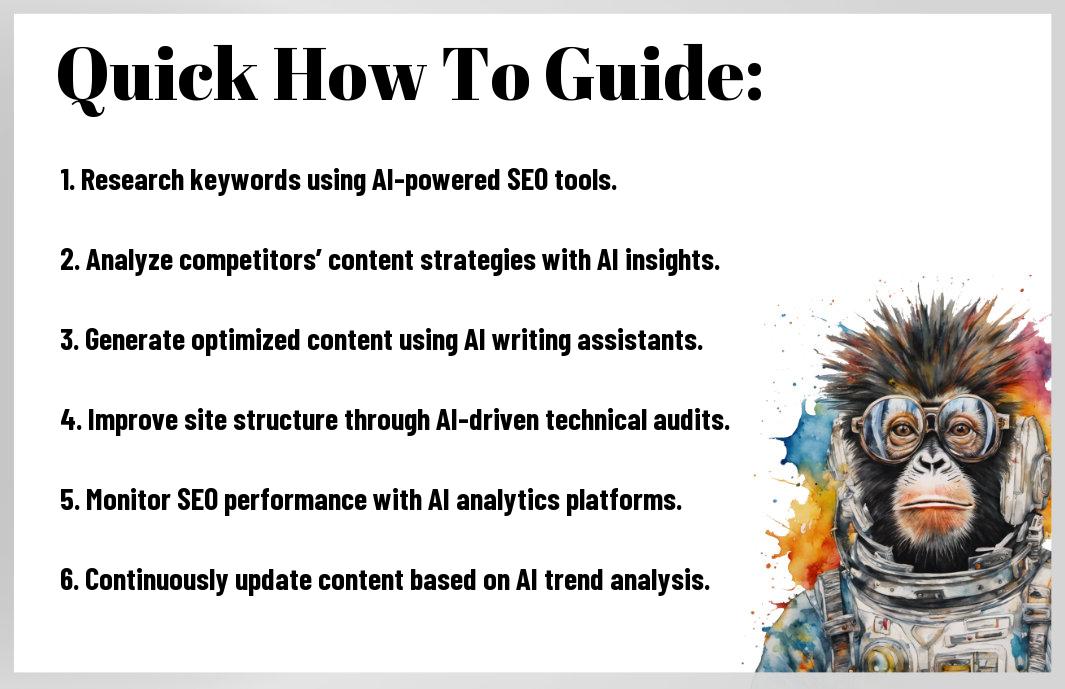
Optimization through AI SEO techniques can significantly enhance your website’s visibility and performance. By implementing strategic algorithms and data-driven insights, you can effectively cater to your target audience while staying ahead of competitors. This guide will provide you with simple yet effective steps to leverage AI tools that will transform your SEO strategy. You will learn how to analyze your website’s performance, improve content relevance, and utilize AI to optimize your keywords, ensuring your site garners the traffic it deserves.
Key Takeaways:
- Utilize keyword research tools to identify relevant terms and phrases that will enhance your content’s visibility in search engines.
- Incorporate AI-generated insights to improve content structure and readability, making your material more engaging and user-friendly.
- Regularly analyze performance metrics and adjust your strategies based on data-driven insights for continuous optimization of your SEO efforts.
Unlocking AI’s Potential in SEO Strategy
Optimizing your SEO strategy involves leveraging the capabilities of artificial intelligence (AI) to enhance content quality and reach. This integration allows you to analyze vast datasets to identify patterns and improve your website’s visibility. By incorporating AI tools into your SEO strategy, you’ll benefit from automation that saves time and effort while driving increased organic traffic to your site.
Harnessing Machine Learning for Content Creation
Machine learning algorithms can analyze user engagement and preferences, helping you create highly relevant content. By using predictive text analytics, AI can suggest topics aligned with trending searches, ensuring that your content stays ahead of the curve. Tailoring your writing based on these insights enables you to resonate with your audience effectively.
Predictive Analytics: Anticipating Trends
Utilizing predictive analytics allows you to forecast emerging trends in your industry. By analyzing historical data and user behavior, you can identify what content is likely to perform well in the future, empowering you to strategically plan your content calendar.
For instance, recent advancements in predictive analytics have shown that brands using these insights saw an average increase of 15% in organic traffic. Tools like Google Trends and SEMrush enable you to monitor shifts in search patterns. By understanding these dynamics, such as seasonal fluctuations or the rise of specific queries, you can optimize your content to meet upcoming demands. This proactive approach not only improves your visibility but positions your website as a valuable resource in your niche.
Crafting Engaging Content with AI Insights
Engaging content is the cornerstone of effective SEO. By leveraging AI insights, you can identify trending topics and tailor your messaging to resonate with your audience. Tools powered by AI analyze user behavior and preferences, giving you the information needed to create compelling narratives that not only attract readers but also keep them coming back for more. Understanding your audience’s needs enables you to craft content that drives interaction and increases your search visibility.
Utilizing AI for Keyword Discovery and Optimization
AI tools streamline the process of keyword discovery, allowing you to find high-traffic, low-competition keywords efficiently. By analyzing vast datasets, these tools surface relevant terms that potential customers use in searches. You can enhance your content strategy by integrating these optimized keywords strategically within your articles while maintaining natural flow. For instance, tools like SEMrush or Ahrefs can provide you with keyword suggestions and performance predictions, ensuring you stay ahead of the competition.
Personalization Techniques to Boost User Engagement
Implementing personalization techniques not only boosts user engagement, but also creates a more tailored experience for your audience. By leveraging AI, you can analyze user data such as browsing history, preferences, and demographics to deliver customized content that speaks directly to their interests. For example, Netflix uses personalized recommendations to keep users engaged, showing them content they are likely to enjoy based on their viewing habits. This level of customization enhances user satisfaction, encourages content sharing, and ultimately drives higher conversion rates. AI can help segment your audience efficiently, allowing you to craft unique messages that foster deeper connections.
Going beyond basic personalization, consider employing dynamic content strategies that adapt based on real-time user interactions. If a visitor shows interest in a specific product category, you can present tailored articles, promotions, or product recommendations that align with their behavior. This method not only captures attention but also generates a sense of relevance that is hard to ignore. As your audience perceives that you understand their needs, they are more likely to engage, share, and convert, contributing to a holistic growth in your SEO results.
Data-Driven Decision Making: Tools and Techniques
Incorporating data-driven decision-making plays a vital role in enhancing your SEO strategy. This approach empowers you to make informed choices based on quantitative data rather than intuition. By utilizing advanced analytics tools, you can track user behavior, identify high-performing keywords, and determine content gaps. Integrating these insights into your SEO plan not only fuels better performance but also leads to more precise resource allocation, ultimately maximizing your ROI.
Automating SEO Audits with AI Tools
AI tools streamline the SEO audit process, enabling you to quickly identify issues that may impact your website’s visibility. By automating tasks such as checking for broken links, assessing page speed, and analyzing meta tags, you save valuable time while ensuring your website meets the highest SEO standards. With tools like SEMrush and Ahrefs, you receive detailed reports that highlight vulnerabilities and areas for improvement.
Analyzing Performance Metrics with AI Analytics
Your ability to analyze performance metrics can be significantly enhanced using AI-driven analytics tools. These platforms can research user engagement data, bounce rates, and conversion metrics, offering insights that paint a comprehensive picture of your SEO effectiveness. Armed with this information, you can pinpoint which strategies yield the best results and make necessary adjustments to optimize your content continuously.
AI analytics tools, such as Google Analytics and HubSpot, go beyond traditional methods to deliver predictive insights, enabling you to foresee trends and optimize content proactively. For instance, by analyzing seasonal traffic patterns, you can prepare your campaigns ahead of time, ensuring you’re not only responding to past data but actively shaping future outcomes. Additionally, the ability to segment your audience and tailor your strategies based on real-time data allows you to create personalized experiences that resonate with your target demographics, greatly enhancing your overall effectiveness.
Staying Ahead of the Curve: The Future of SEO with AI
The landscape of SEO is continually evolving, and the integration of AI technologies is setting new standards for optimizing online visibility. Anticipating trends such as hyper-personalization, AI-driven content curation, and predictive analytics will give you the competitive edge. Embracing these advancements not only enhances your adaptability but also positions your brand as a leader in the industry, ensuring long-term success in a rapidly changing digital space.
The Role of AI in Voice Search Optimization
AI significantly enhances voice search optimization, allowing you to tailor your content for conversational queries. As more users turn to voice assistants like Siri and Alexa, incorporating natural language processing will improve relevance in search results. Optimizing for long-tail keywords and frequently asked questions can lead to higher visibility in voice search outcomes, positioning your content where it matters most.
Adapting to Algorithm Changes Powered by AI
With AI-driven algorithms being increasingly utilized, adapting to changes requires agility and a proactive approach. Regularly updating your website’s content, employing schema markup, and understanding user intent will help you stay ahead. AI tools can analyze real-time shifts in rankings and user behavior, allowing you to tailor strategies instantaneously for optimal performance in search engine results.
Staying adaptable in the face of AI algorithm changes involves leveraging analytics to identify shifts in traffic patterns and user preferences. Utilizing tools such as Google Analytics, you can ascertain which keywords are losing traction, enabling you to pivot your content strategy swiftly. Engaging in continuous education about emerging AI technologies will also empower you to anticipate changes and integrate effective responses, ensuring your SEO remains top-tier amidst algorithm updates.
Ethical Considerations in AI-Driven SEO
In an era where AI shapes your SEO strategies, understanding the ethical implications is vital. You must prioritize transparency and honesty in your automation processes. Relying too heavily on AI can lead to a disconnection with your audience, potentially compromising brand integrity if you neglect the human touch in your content creation and engagement.
Balancing Automation with Authenticity
Ensuring that AI tools complement your unique voice is important for maintaining audience trust. Automating mundane tasks allows you to focus on creating authentic content that resonates with your audience. Think of AI as a partner in your SEO strategy rather than a replacement for your creativity and personalized engagement.
Avoiding Pitfalls of Over-Optimization
Avoiding the traps of over-optimization protects your site’s credibility and user experience. Relying excessively on AI algorithms can lead to keyword stuffing or unnatural writing, which search engines penalize. Instead, focus on creating valuable content that meets user intent while still incorporating smart keyword strategies. Striking a balance ensures your content remains both relevant and engaging.
Over-optimization can manifest in several ways, including excessive repetition of keywords, creating content that caters solely to algorithms rather than your audience, and neglecting vital user experience elements. Search engines like Google continuously update their algorithms to prioritize quality over quantity, which means that a website overly stuffed with keywords is likely to see a decline in rankings. Prioritize readability, provide genuine insights, and encourage natural interaction with your content. Achieving a harmonious blend of SEO best practices and user-centric principles leads to sustained success and avoids the pitfalls of being flagged by search engines as manipulative or spammy.
Final Words
From above, you can see that optimizing your content with AI SEO techniques involves straightforward steps that can significantly enhance your online presence. By leveraging AI tools for keyword research, content optimization, and performance analysis, you can identify opportunities that lead to improved search rankings. Emphasizing quality content creation and user engagement ensures that your readers find value in what you offer. Implement these techniques consistently, and you will likely notice an increase in organic traffic and overall effectiveness of your SEO strategy.
FAQ
Q: What are AI SEO techniques and how can they benefit my website?
A: AI SEO techniques utilize artificial intelligence to analyze data and improve search engine optimization strategies. These techniques can help identify trends, keyword opportunities, and content gaps. By analyzing user behavior and engagement, AI can tailor strategies to enhance visibility on search engines, leading to increased traffic and user engagement on your website.
Q: How can I implement AI tools for keyword research?
A: Implementing AI tools for keyword research involves selecting software or applications that leverage machine learning algorithms to analyze search data. Start by choosing a reputable AI-driven keyword research tool, inputting your industry or topic, and allowing the tool to generate a list of relevant keywords with metrics such as search volume, competition, and intent. Utilize this information to optimize your content and drive traffic effectively.
Q: What are some best practices for using AI-generated content for SEO?
A: To effectively use AI-generated content for SEO, follow these best practices: firstly, ensure the content is informative, engaging, and well-structured. While AI can assist in content creation, human oversight is crucial to maintain quality and relevance. Additionally, incorporate target keywords naturally throughout the text, use headings and subheadings for organization, and optimize meta tags. Confirm that the AI’s output aligns with your audience’s needs and incorporates semantic search principles.
Search Here
About us

Talisman Marketing
Casting spells and implementing magic on your marketing plans since 2011
Magic Marketing
Services
Testimonial

"Quality Service"
Always accessible with quality service. Big thanks to Talisman Consulting!
Jeff Ball
Think Local
Gallery


