
Strategic How-To Approaches For Impactful Localized Content Marketing

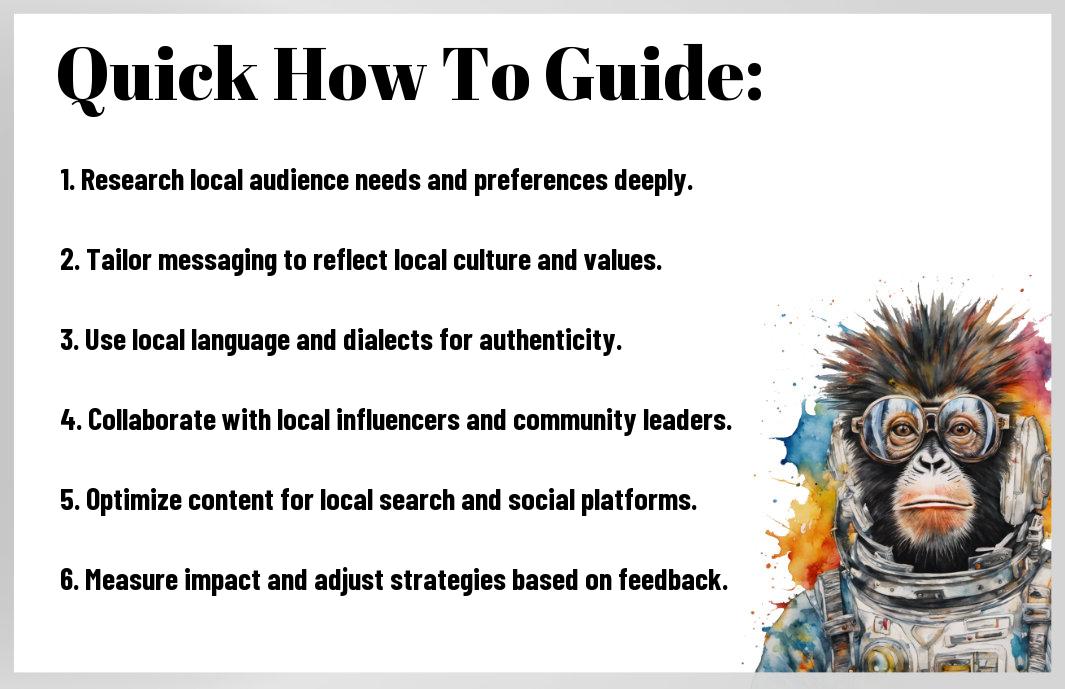
Marketing effectively requires a deep understanding of your audience, and localized content marketing is pivotal for connecting with local consumers. In this guide, you’ll discover strategic approaches that enable you to craft content tailored to your community’s unique needs and preferences, ultimately driving engagement and boosting sales. By following these methodologies, you can enhance your brand’s visibility and foster lasting relationships with your local market, ensuring your promotional efforts yield positive results and avoid the pitfalls of generic messaging.
Key Takeaways:
- Understanding the local culture and audience preferences is crucial for creating resonant and effective content that drives engagement.
- Leveraging local influencers and partnerships can enhance credibility and visibility, fostering a more authentic connection with the target demographic.
- Utilizing data analytics to monitor performance and adapt strategies ensures that content remains relevant and impactful over time.
The Cultural Currents Shaping Localized Content
Localized content strategies necessitate an awareness of the underlying cultural currents in your target market. From regional traditions and social practices to prevailing attitudes and values, understanding these elements allows for the creation of content that resonates and engages. Aligning your messaging with local events, cultural celebrations, or societal changes not only deepens your brand’s connection with the audience but also enhances trust and credibility. Staying updated on cultural shifts can inform your campaigns, ensuring they are not only relevant but also embraced by the community.
Identifying Local Nuances and Sensibilities
Delving into local nuances involves recognizing specific dialects, customs, and behaviors that shape interactions. This may include examining how language varies within communities or identifying unique cultural practices related to holidays and social gatherings. By conducting surveys and analyzing social media trends, you can enhance your understanding of what appeals to different demographics within your target audience, ultimately enhancing your content’s impact.
Harnessing Cultural Symbols and References
Utilizing cultural symbols and references effectively fosters a connection with your audience by tapping into shared values and experiences. By incorporating local folklore, popular imagery, or even idioms relevant to the community, your content resonates on a deeper level. This approach reinforces the perception that your brand understands and respects the local culture, making your messaging more authentic and relatable.
Diving deeper into cultural symbols and references, consider local festivals or historical figures that embody your target audience’s identity. For instance, a brand targeting Italian consumers might reference traditional foods or famous operas that resonate deeply. Similarly, a campaign aimed at a younger demographic might incorporate contemporary slang from local influencers or social media trends. Engaging with cultural references not only showcases your brand’s authenticity but also promotes relatability, driving higher engagement levels and fostering loyalty among your audience.
Crafting Messages that Resonate Locally
Messages must directly align with local audiences and their unique contexts. To achieve this, you should dive deep into local customs, dialects, and community interests. Conducting thorough research helps you craft messages that spark emotional connections, driving better engagement. Consider variations in humor, idioms, and imagery that are distinct to each locale, ensuring that your content feels native rather than foreign.
Language Localization: Beyond Translation
Language localization transcends mere translation; it involves adapting your messaging to reflect local dialects and cultural nuances. This means using specific terms and phrases that resonate with your audience while also considering regional grammar and syntax. A successful localized campaign utilizes native speakers for proofreading and cultural vetting, ensuring that your content delivers the intended impact.
Tailoring Content to Local Audience Values
Understanding and embracing local audience values strengthens your marketing impact. By analyzing consumer behavior patterns, you can tailor your content to reflect what matters most to them—be it community involvement, sustainability, or family-oriented messaging. Targeting specific values like environmental concerns or local pride can foster stronger emotional connections, ultimately driving loyalty and active engagement.
For instance, if your target audience prioritizes environmental sustainability, integrating eco-friendly themes into your campaigns can have a profound effect. Creating localized content that showcases your commitment to green practices—such as collaborating with local non-profits or highlighting your use of sustainable materials—shows that you share their values. Data indicates that companies demonstrating social responsibility see a 78% increase in customer loyalty. Tailoring your content to reflect local values can transform casual consumers into passionate advocates for your brand.
Building Connections Through Community Engagement
Community engagement transforms your brand from a mere service provider to a trusted local ally. By participating in local events, hosting workshops, or simply supporting neighborhood initiatives, you create a genuine connection with your audience. This relationship fosters loyalty and trust, driving referrals and word-of-mouth marketing. The more you invest in your local community, the more your brand becomes woven into its fabric, making it more relevant and resonant in the eyes of local consumers.
Foster Local Partnerships for Authenticity
Forging partnerships with local businesses and organizations enhances your brand’s authenticity. Collaborations, such as co-hosting events or cross-promoting services, allow you to tap into established trust within the community. These partnerships not only broaden your reach but also lend credibility to your brand, showcasing your commitment to supporting local endeavors.
Engaging with Local Influencers and Advocates
Building relationships with local influencers amplifies your message and connects you with a wider audience. These individuals have built trust and rapport with their followers, making their endorsement valuable. Forming collaborations for social media campaigns, product placements, or community events can increase your visibility and demonstrate your commitment to the local culture. Their insights can also help you refine your content strategy to resonate even deeper with your target community.
For instance, consider the case of a small coffee shop that teamed up with a local food blogger known for championing sustainable businesses. By hosting tasting events and leveraging the influencer’s online presence, the coffee shop reached thousands of potential customers who valued eco-friendly practices. This partnership not only drove foot traffic but also generated online buzz that positioned the shop as a community leader in sustainability. Engaging with influencers can therefore be a game-changer in enhancing your localized content marketing strategy.
Measuring Impact: Metrics that Matter
Understanding the effectiveness of your localized content marketing efforts requires robust measurement techniques. Focus on metrics that provide insight into your audience’s interactions and preferences. Utilize tools like Google Analytics and social media analytics to assess traffic sources, engagement rates, and conversion statistics. Tailoring your strategies based on these analytics allows you to enhance your content’s relevance and resonance within localized markets.
Setting Clear, Localized KPIs
Establishing specific, localized KPIs ensures that your marketing efforts align with your goals. Focus on metrics such as local engagement rates, website traffic from targeted regions, and social shares within community circles. These KPIs can help you evaluate performance and adjust your strategies accordingly, enhancing your overall impact in the market.
Analyzing Audience Feedback and Engagement
Audience feedback serves as a powerful indicator of your content’s success. Actively monitor comments, reviews, and social media interactions to gauge how well your content resonates with local audiences. High engagement rates often signal that your content is hitting the mark, while low interaction may indicate a need for reevaluation.
Digging deeper into audience feedback can reveal trends that are crucial for future content creation. For example, if your local audience frequently discusses specific topics or trends in comments, consider crafting more content around these themes. Analyzing engagement metrics, such as likes, shares, and time spent on content, can also inform you about what captivates your viewers. Using surveys and polls to solicit direct feedback helps refine your understanding of their preferences and builds a dialogue, fostering a community around your brand. This engagement allows for more responsive and impactful localized content strategies moving forward.
Adapting Strategies for Continuous Improvement
Your ability to adapt is key to maintaining relevance in localized content marketing. Continuously analyzing your strategies will ensure you remain aligned with the evolving needs of your audience. Collect insights through regular assessments, audience feedback, and A/B testing, enabling you to pivot your tactics effectively. By fostering a culture of innovation and flexibility, you empower your team to respond proactively to shifts, allowing your content to resonate more deeply with local audiences over time.
Iterating Content Based on Performance Data
Staying Ahead of Local Trends and Shifts
Final Words
Considering all points, adopting strategic how-to approaches for impactful localized content marketing can significantly enhance your connection with target audiences. By aligning your messaging with local culture, preferences, and language, you can create content that resonates deeply. Focus on understanding your audience’s needs and leverage local insights to foster engagement. Utilize various content formats and distribution channels to maximize your reach. With these strategies in place, you will not only improve your brand visibility but also build stronger relationships within your community, ultimately driving more effective marketing outcomes.
Q: What are the key components of a successful localized content marketing strategy?
A: A successful localized content marketing strategy involves several key components. First, understanding the target audience in specific geographic regions is important, including their cultural preferences, language nuances, and local trends. Second, tailor the messaging and visuals to resonate with local sentiments while maintaining brand consistency. Third, utilizing local influencers or community figures can enhance credibility and improve outreach. Additionally, embracing local events and incorporating user-generated content can foster community engagement and develop a deeper connection with the audience.
Q: How can businesses effectively adapt their existing content for local markets?
A: To effectively adapt existing content for local markets, businesses should conduct thorough research to identify regional differences in language and culture. This may involve translating content while also localizing idioms, references, and examples that may not be relevant or effective in the new context. Furthermore, it’s beneficial to engage local teams for insights and feedback during the adaptation process. Incorporating local case studies or testimonials can also strengthen relatability. Finally, testing the content with a focus group from the target region can provide valuable insights that improve effectiveness before a full launch.
Q: What metrics should be monitored to measure the success of localized content marketing campaigns?
A: To gauge the success of localized content marketing campaigns, several metrics should be monitored. Key performance indicators (KPIs) include engagement rates (likes, shares, comments), conversion rates (how many users take the desired action), and website traffic specifically from localized campaigns. Additionally, analyzing audience feedback through surveys or direct responses can provide qualitative insights. Monitoring social media mentions and sentiment can also give an indication of the content’s reception within the local market. By assessing these metrics, businesses can refine their strategies to enhance impact over time.
Search Here
About us

Talisman Marketing
Casting spells and implementing magic on your marketing plans since 2011
Magic Marketing
Services
Testimonial

"Quality Service"
Always accessible with quality service. Big thanks to Talisman Consulting!
Jeff Ball
Think Local
Gallery


