
Dynamic How-To Methods For Enhancing Your Website With AI SEO Techniques

You can transform your website’s visibility and engagement using dynamic AI SEO techniques. By adopting these innovative methods, you’ll not only improve your search rankings but also attract and retain more visitors. This post will guide you through a variety of effective strategies, ensuring you utilize the full potential of artificial intelligence in your SEO efforts. Get ready to elevate your site and stay ahead in the competitive digital landscape with the right tools and insights.
Key Takeaways:
- Incorporate AI tools to optimize keyword research and content relevance, ensuring that your website stays tuned to evolving search engine algorithms.
- Utilize machine learning models to analyze user behavior, improving the website experience through personalized content delivery and enhanced engagement.
- Regularly assess website performance using AI-driven analytics, enabling continuous improvement in SEO strategies and better alignment with industry trends.
Harnessing AI for Keyword Intelligence
AI’s capabilities extend beyond basic keyword search; you can harness these advanced tools to provide deep insights into keyword intelligence, significantly improving your website’s searchability. Leveraging AI algorithms enables you to analyze competition, understand user intent, and uncover niche opportunities. You’ll find that integrating these elements elevates your SEO strategies and helps you create content that resonates with your target audience.
Identifying High-Value Keywords
Utilizing AI-powered tools allows you to pinpoint high-value keywords with remarkable precision. These tools analyze search volume, competition rates, and user intent, helping you select terms that can significantly increase traffic to your site. Targeting keywords that align well with your content strategy ensures that you’re not just attracting visitors but quality leads that convert.
Leveraging Predictive Analytics for Trending Topics
Applying predictive analytics gives you an upper hand in identifying trending topics before they go mainstream. By examining patterns and forecasting future searches, you can align your content strategy with the topics that are set to capture interest. This proactive approach keeps your website relevant and enhances potential engagement.
Predictive analytics in SEO involves utilizing AI tools that sift through vast amounts of data to highlight trends that may not be immediately obvious. For example, tools like Google Trends or BuzzSumo can track rising conversations in real-time, allowing you to create content aligned with emerging interests. Additionally, by combining insights from social media platforms and news sites, you can capture audience sentiments and adjust your content accordingly, ensuring that your website stays ahead of the competition and resonates with your audience’s evolving needs.
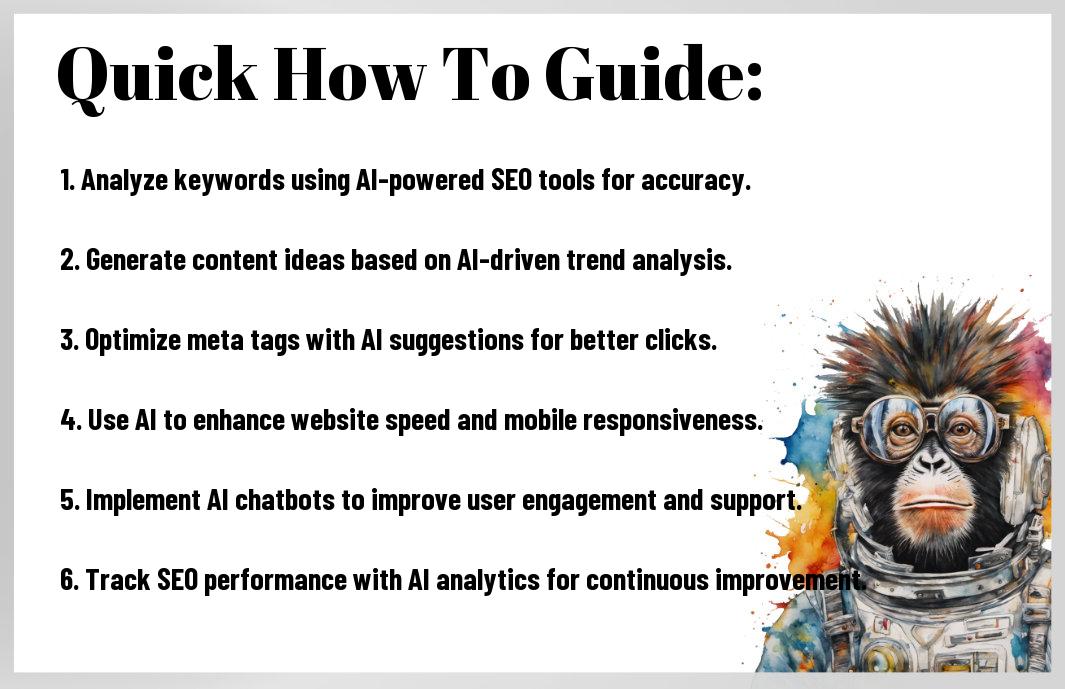
Crafting AI-Driven Content That Resonates
Focusing on crafting AI-driven content allows you to engage your audience effectively while enhancing your website’s SEO performance. With tools like The Dynamic Duo of SEO and AI | by Kathi Kruse, you can harness the power of artificial intelligence to create content that not only ranks well but also connects with your readers on a personal level.
Utilizing Natural Language Processing for Content Creation
Natural Language Processing (NLP) enables you to analyze and generate human-like text, enhancing your content creation process. By leveraging NLP algorithms, you can identify trending topics, optimize keyword usage, and structure your writing for maximum engagement. This technology understands nuances in language, allowing you to connect more authentically with your audience, ultimately boosting your site’s authority.
Adapting Tone and Style Through Machine Learning
Machine learning algorithms empower you to adapt the tone and style of your content based on audience preferences. By analyzing user interactions and feedback, these algorithms can determine which voice resonates best with your target demographic. This adaptability ensures that your content feels personal and relevant, driving higher engagement rates and reducing bounce rates. Furthermore, incorporating elements of machine learning can lead to more tailored experiences, showing users that you understand their unique needs and preferences.
Adapting tone and style through machine learning involves continuous learning from audience interactions. For instance, if your audience notably prefers a conversational tone over a formal one, the machine learning model can adjust future content accordingly, creating a personalized experience. This not only fosters a stronger connection with your readers but also enhances your site’s overall SEO effectiveness by retaining visitors longer and encouraging social sharing. By integrating feedback loops from user data, you ensure that your content evolves in harmony with your audience, maintaining relevance in an ever-changing digital landscape.
Enhancing User Experience with Personalized Recommendations
Personalizing your users’ experience can significantly boost engagement and satisfaction. By leveraging AI algorithms, you can analyze user behavior and preferences to deliver tailored recommendations, making your website feel more intuitive and responsive. For instance, if a visitor frequently browses for athletic gear, showing them relevant products or content based on their interests can enhance their journey and lead to higher conversion rates. Ultimately, personalized recommendations keep users on your site longer and promote further exploration.
Implementing AI Chatbots for Interactive Engagement
AI chatbots serve as a powerful tool for fostering real-time interaction with your visitors. They can answer questions, provide instant support, and guide users through your site. By using natural language processing, these chatbots engage users conversationally, improving their experience. For example, an e-commerce site could deploy a chatbot to assist users in finding products based on their past purchases or browsing habits, thus creating a personalized shopping experience.
Utilizing Behavioral Analytics for Tailored Experiences
Behavioral analytics empowers you to gain insights into how users interact with your site. By tracking actions like clicks, scrolling, and time spent on pages, you can identify trends and preferences. This data enables you to adjust your content, layout, or offerings to align more closely with what your visitors want to see, increasing the chances of conversions. For instance, if analytics indicate that users frequently abandon pages on a specific category, you can optimize those pages to better meet their needs or interests.
Utilizing behavioral analytics for tailored experiences activates a continuous feedback loop, guiding your improvement strategies. For instance, platforms like Google Analytics and Hotjar can uncover user journey paths, letting you see the most common entry and exit points. If you find that users abandon their shopping carts often, it’s possible to experiment with sending targeted follow-up emails offering discounts or reminders. Defining successful touchpoints based on user interactions allows your website to evolve in alignment with changing visitor preferences, ultimately maximizing engagement and retention. Implementing these insights not only enhances the user experience but drives your SEO performance through increased dwell time and reduced bounce rates.
Automating Technical SEO for Maximum Efficiency
Automating technical SEO processes enables you to optimize site performance without the manual, time-consuming tasks that often bog down teams. With advanced AI tools, you can achieve consistent monitoring, identify SEO issues swiftly, and implement solutions seamlessly. This automation frees you to focus on creative strategic enhancements while relying on technology to maintain foundational work continually.
Streamlining Site Audits with AI Tools
Utilizing AI-driven site audit tools simplifies the traditionally tedious process of identifying technical SEO issues. These tools analyze your website on various levels—from broken links to duplicate content—which empowers you to fix errors promptly and improve site health. By automating audits, you not only save time but also ensure that your SEO strategy continuously aligns with the latest best practices.
Enhancing Page Load Speeds and Mobile Optimization
Fast load times and optimal mobile experiences are vital for retaining visitors and improving search rankings. AI tools can analyze your site’s performance metrics, pinpointing elements that slow down loading speeds and suggesting improvements, such as image optimization and minification of CSS and JavaScript. With over 50% of users abandoning a site that takes longer than three seconds to load, prioritizing these optimizations is non-negotiable.
Expanding on page load optimization, leveraging AI for image compression and server response time analysis can exponentially improve user experience. For instance, implementing lazy loading ensures images only load when they appear in the viewer’s viewport, significantly reducing initial load times. You can also utilize Content Delivery Networks (CDNs) strategically tailored through AI insights to ensure users across the globe have rapid access to your site. With mobile devices accounting for nearly 60% of all searches, seamless integration and speed tailored specifically for mobile users must be part of your strategy, enhancing usability while driving higher engagement and conversions.
Monitoring Performance with AI-Powered Analytics
Utilizing AI-powered analytics equips you with invaluable insights into your website’s performance. These sophisticated tools analyze user behavior patterns, track engagement metrics, and measure conversion rates to help you identify what’s working and what needs improvement. By leveraging real-time data, you can make informed decisions that optimize your content and marketing strategies, allowing for a responsive approach to user needs and preferences.
Adapting Strategies Based on Real-Time Data
Real-time data enables you to pivot your strategies rapidly, ensuring that your website remains relevant and effective. By closely monitoring user interactions and feedback, you can tweak your SEO techniques on the fly, adjusting keywords or content based on visitor behavior. This agility not only enhances user experience but also drives higher conversion rates as you align your offerings with visitor expectations.
Forecasting Trends with Machine Learning Algorithms
Machine learning algorithms can predict emerging trends by analyzing vast amounts of data quickly and efficiently. This predictive ability helps you stay ahead of your competitors by identifying shifts in user interests or changes in market dynamics. Incorporating these insights into your strategy allows you to proactively adjust your content and SEO efforts, enhancing your website’s relevance and appeal to your target audience.
Moreover, incorporating machine learning for forecasting trends means leveraging advanced analytics to evaluate historical data and user behavior patterns. For instance, if your analytics reveal a growing interest in eco-friendly products within your niche, you can create content that directly addresses this trend, such as blog posts or product lines that cater to environmentally-conscious consumers. This forward-thinking approach not only captures organic traffic but also fosters brand loyalty, as users respect and resonate with content that aligns with their values. Applying these insights can profoundly impact your website’s growth trajectory and relevance in an ever-changing digital landscape.
Summing up
As a reminder, implementing dynamic AI SEO techniques can significantly enhance your website’s visibility and effectiveness. By leveraging AI tools to optimize content, analyze user behavior, and refine keyword strategies, you can create a more engaging online experience. Regularly updating your methods and staying informed about industry trends will ensure your website remains competitive. Embracing these innovative approaches not only improves your site’s performance but also drives organic traffic, ultimately contributing to your business’s growth.
FAQ
Q: What are the basic AI SEO techniques I can implement to enhance my website?
A: There are several AI SEO techniques that can be easily implemented to improve your website’s performance. Some of the fundamental methods include using AI-driven keyword research tools to identify high-value keywords, applying machine learning algorithms to analyze user engagement data, and optimizing content based on predictive analytics to better meet audience expectations. Additionally, incorporating AI-generated content can help in creating relevant articles and blog posts that can engage users and attract organic traffic.
Q: How can I effectively use AI tools for content optimization on my website?
A: To utilize AI tools for content optimization, first, choose an AI content optimization software that can analyze your existing content and provide recommendations. This tool can suggest improvements in readability, keyword density, and overall SEO performance. After implementing the suggestions, you should also leverage natural language processing (NLP) tools to ensure your content addresses user intent accurately. Regularly updating your content with fresh insights and using AI analytics to track engagement can further refine your approach and improve your overall strategy.
Q: What role does AI play in analyzing my website’s SEO performance?
A: AI plays a significant role in SEO performance analysis by offering advanced data processing capabilities that identify patterns in website traffic and user behavior. AI analytics tools can generate insights on page performance, track metrics like bounce rate and dwell time, and provide predictive analytics on future trends. By utilizing these tools, you can pinpoint areas for improvement, conduct competitor analysis, and adjust your SEO strategy accordingly to stay ahead in search rankings.
Search Here
About us

Talisman Marketing
Casting spells and implementing magic on your marketing plans since 2011
Magic Marketing
Services
Testimonial

"Quality Service"
Always accessible with quality service. Big thanks to Talisman Consulting!
Jeff Ball
Think Local
Gallery


