
Proven How-To Frameworks For Achieving Results With AI SEO Techniques

SEO is a dynamic field, and mastering AI-driven techniques can propel your website to new heights. In this post, you will discover proven frameworks specifically designed to enhance your SEO strategies effectively. By implementing these practices, you can leverage artificial intelligence to improve your site’s ranking and visibility, ultimately attracting more organic traffic. Get ready to transform your approach to SEO and witness tangible results that can significantly boost your online presence.
Key Takeaways:
- Implement structured data and schema markup to enhance the visibility of content in search results and improve click-through rates.
- Utilize AI tools for keyword research and competitive analysis to identify high-potential keywords that align with user intent.
- Regularly analyze performance metrics and adjust strategies based on data-driven insights to optimize ongoing SEO efforts.
The SEO Landscape Transformed by AI
Artificial Intelligence is reshaping the SEO landscape, enabling businesses to enhance their online presence more effectively than ever. You now have access to advanced algorithms that can analyze massive amounts of data, offering insights that traditional SEO methods simply can’t match. From automating keyword research to generating high-quality content, AI-driven tools change how you approach search engine optimization, leading to improved rankings and a better user experience.
Exploring the Impact of AI on Traditional SEO Practices
AI significantly alters traditional SEO practices by streamlining processes and optimizing strategies. Instead of relying solely on manual keyword research and data analysis, you can use AI tools to uncover patterns and trends in user behavior, allowing for targeted content creation. This evolution frees up your time and resources, enabling you to focus on more strategic aspects of your SEO efforts.
Key AI Technologies Reshaping Search Engine Optimization
Several AI technologies are redefining search engine optimization, making it crucial for you to stay updated. Tools leveraging Natural Language Processing (NLP), machine learning, and predictive analytics improve both content creation and user engagement. Furthermore, AI-driven chatbots enhance customer interaction, while image recognition ensures visual content optimization. These innovations create a more dynamic and personalized browsing experience, directly impacting your site visibility and rankings.
Natural Language Processing, for instance, enables search engines to interpret user intent with remarkable accuracy, which improves how your content aligns with search queries. Machine learning algorithms analyze user interactions to predict future behaviors, allowing you to optimize your content proactively. Predictive analytics provides insights into emerging trends, giving you an edge over competitors by adapting your strategy based on timely data. By harnessing these key technologies, you’re not just keeping pace with the changes in SEO, but actively leveraging them to drive results for your website.
Proven Frameworks for AI-Driven Keyword Research
Harnessing AI for keyword research can exponentially elevate your SEO game. By utilizing deep learning and advanced algorithms, you can uncover high-impact keywords that resonate with your target audience. Techniques like Natural Language Processing (NLP) and machine learning allow you to analyze search intent and trends effectively, giving your content strategy a significant edge. With AI, you’re not just selecting keywords; you’re creating a roadmap that aligns with user behavior and search habits.
Utilizing Natural Language Processing for Enhanced Insights
Natural Language Processing enables you to extract insights from vast amounts of textual data. By analyzing search queries and customer feedback, you can identify trending topics, user sentiment, and the context behind the words people are using. This makes it easier for you to optimize your content to meet the specific needs of your audience, ultimately improving your search engine rankings.
Deploying Machine Learning Algorithms to Identify Long-Tail Opportunities
Machine learning algorithms can identify long-tail keywords that often go overlooked but can drive substantial traffic. These algorithms analyze patterns in search data, enabling you to discover niche terms that potential customers use. By targeting these keywords, you can reach a more specific audience, reduce competition, and enhance conversion rates.
For instance, using clustering techniques, machine learning can group similar keyword phrases, revealing hidden opportunities for optimized content creation. If your main keyword is “running shoes,” these algorithms might identify less competitive, long-tail variations like “best running shoes for flat feet” or “affordable trail running shoes.” By focusing on these specific phrases, you can capture the attention of a dedicated audience searching for precise solutions, leading to increased engagement and better ranking potential in search engine results. This targeted approach not only drives more qualified traffic but ultimately enhances your ROI through improved conversion optimization strategies.
Crafting Content that Ranks: AI-Powered Strategies
Successful content creation hinges on understanding not just what to say, but how to say it. By leveraging AI tools, you can create compelling content that resonates with both users and search engines. Craft your narrative to include relevant keywords derived from in-depth research, while ensuring that the information remains engaging and valuable to your audience. The fusion of creativity and data-driven insights can lead to content that doesn’t just inform, but also ranks highly on search results pages.
Leveraging AI Tools for Content Optimization
Utilizing AI-powered platforms enables you to streamline your content optimization process significantly. Tools such as Clearscope and SurferSEO analyze top-performing content in your niche, providing keyword suggestions and related terms that enhance relevance. With these insights, you can tailor your writing to match search intent more effectively, increasing the likelihood of attracting organic traffic.
Building a Content Strategy Based on Predictive Analytics
Predictive analytics plays a vital role in shaping your content strategy, helping you anticipate future content trends and user needs. By analyzing historical data and current search patterns, AI algorithms can predict the topics that are likely to gain traction. This proactive approach means you’re not just reacting to trends but actively positioning your content to meet user demands before they arise.
When employing predictive analytics for content strategy, start by analyzing metrics from your existing content to identify patterns in user engagement and search volume. Tools like Google Analytics and SEMrush allow you to tap into past performance, highlighting keywords and themes that have historically driven traffic. This data not only guides your topic selection but also aids in crafting content that addresses potential user queries before they become mainstream. By aligning your content strategy with predicted search trends, you ensure that your material remains relevant, engaging, and poised to rank well in SERPs.
Advanced Link Building Techniques Enhanced by AI
Harnessing AI for advanced link building transforms how you establish your domain’s authority online. By leveraging machine learning and predictive analytics, you can effectively identify high-value opportunities for backlinks, automate outreach, and streamline potential partnership formations with relevant sites. The following strategies can enhance your link-building efforts:
- Identify high-authority domains efficiently.
- Personalize outreach using AI-driven insights.
- Track competitor backlinks for inspiration.
- Utilize AI tools to analyze backlinks for quality over quantity.
- Leverage content gaps to create link-worthy resources.
| Technique | Description |
|---|---|
| AI-Powered Outreach | Use AI tools to refine outreach strategies, ensuring you connect with the right audience. |
| Quality Backlink Analysis | Analyze and prioritize backlinks focusing on their domain authority for better results. |
| Content Gap Analysis | Identify content gaps where you can create valuable resources to attract backlinks. |
Automating Outreach and Building Quality Backlinks
By automating your outreach processes using AI technology, you can capitalize on personalized messaging and target outreach more precisely. AI systems can analyze previous interactions, tailor messages based on recipient behavior, and suggest optimal times for follow-up. This minimizes manual effort while maximizing the potential response rate, allowing you to secure quality backlinks efficiently.
Analyzing Domain Authority with AI for Strategic Partnerships
Leveraging AI to analyze domain authority is a game-changer when forming strategic partnerships. Advanced algorithms can assess thousands of domains in minutes, highlighting not only the authority each site holds but also their relevance to your trade. You gain insights into potential partners’ backlink profiles, audience demographics, and engagement metrics, helping you forge powerful collaborations that enhance your SEO efforts.
Working with AI to analyze domain authority allows you to uncover hidden opportunities within your niche. For instance, tools equipped with AI can quickly gauge domain strength and relevance, making it easier to prioritize outreach targets based on collective metrics. Imagine filtering potential partners not just by their authority but by how their audience matches yours; this means forming alliances that not only bring backlinks but also drive engaged traffic. The ability to predict the success of a partnership based on historical data and AI-driven forecasts can dramatically reshape your link-building strategy, ensuring each connection contributes meaningful value to your SEO profile.
Measuring Success: AI Metrics That Matter
To effectively gauge your AI SEO efforts, focusing on the right metrics is crucial. Tracking KPIs such as organic traffic growth, bounce rates, and conversion rates can provide valuable insights into your performance. Consider diving deeper into advanced strategies by exploring How to Rank in AI Search Results: 9 Effective Strategies. These will help you hone in on what influences your rankings and drive continuous improvement.
Defining Key Performance Indicators for AI SEO
Identifying specific key performance indicators (KPIs) allows you to measure the effectiveness of your AI-driven SEO strategies. Focus on metrics such as keyword rankings, organic search traffic, and user engagement rates. These indicators help determine whether your content resonates well with your audience and aligns with search intent. Tracking these KPIs consistently provides a clearer picture of your SEO success and areas needing attention.
Interpreting Data to Drive Continuous Improvement
Data interpretation involves analyzing the metrics you’ve tracked to uncover trends, successes, and shortcomings in your AI SEO strategies. Regularly reviewing this data aids in understanding what optimizations yield the best results. By continuously iterating on your strategies based on insights gained from your KPIs, you can refine your content, enhance user experience, and ultimately improve your search engine rankings.
Digging deeper into data interpretation empowers you to make informed decisions regarding your SEO approach. For instance, you might discover that certain keywords drive significant traffic but show high bounce rates. This indication suggests a disconnect in user expectation versus content quality. Adjusting your content strategy in response—such as enhancing on-page elements or optimizing for long-tail keywords—can lead to improved engagement and better rankings. Ultimately, a robust feedback loop from your data ensures your SEO tactics evolve alongside user behavior and algorithm changes, keeping you ahead of the curve.
To wrap up
To wrap up, implementing proven how-to frameworks for achieving results with AI SEO techniques can significantly enhance your online presence. By integrating AI insights into your SEO strategy, you can streamline your processes, optimize content for search engines, and ultimately drive more traffic to your site. Focus on understanding your audience, leveraging AI tools for data analysis, and consistently refining your approach. This not only saves time but also empowers you to create content that resonates with users, ensuring that you stay ahead in the ever-evolving digital landscape.
Q: What are AI SEO techniques and how can they enhance my website’s visibility?
A: AI SEO techniques involve the use of artificial intelligence tools and algorithms to optimize web content for search engines. These techniques can analyze huge volumes of data to identify which keywords are most effective, predict search trends, and automate content creation. By integrating AI into your SEO strategy, you can enhance your website’s visibility by ensuring that your content aligns with what users are searching for and improves overall ranking in search engine results pages (SERPs). This leads to increased organic traffic and higher engagement rates.
Q: How do I implement proven frameworks for AI-driven SEO strategies?
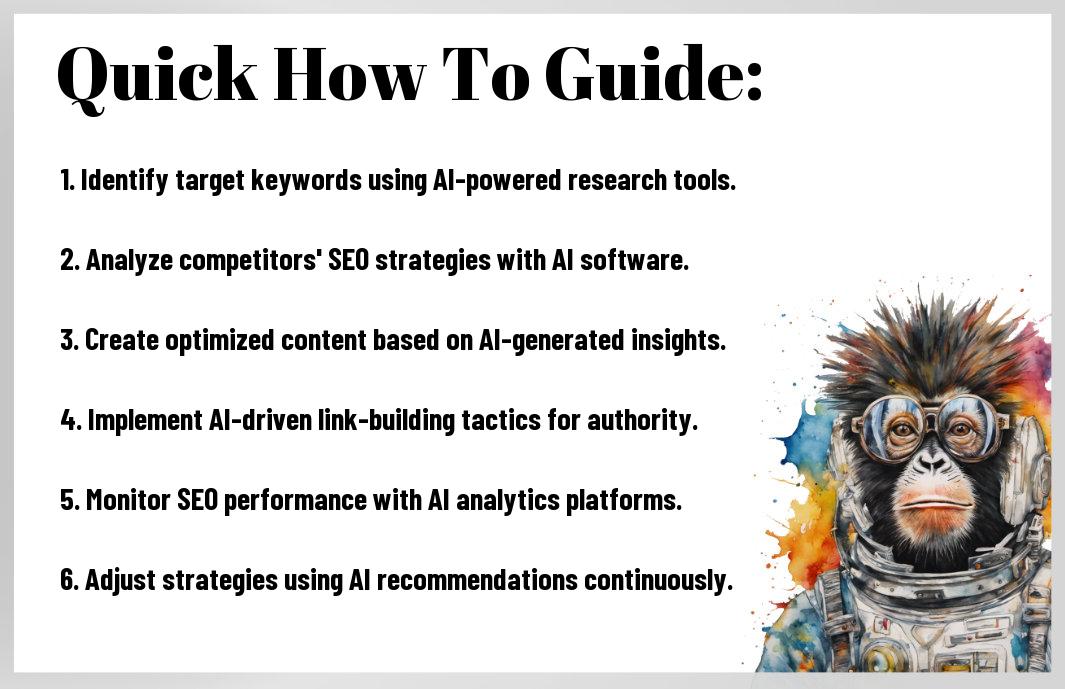
A: Implementing proven frameworks for AI-driven SEO involves several steps: first, conduct a comprehensive audit of your current SEO practices to identify areas for improvement. Second, leverage AI tools that provide insights into keywords, site performance, and competitive analysis. Third, create and optimize content based on data-driven suggestions provided by these AI tools. Finally, continuously monitor performance metrics and tweak your strategies based on real-time data to ensure ongoing optimization. By following these structured steps, you can effectively harness the power of AI to drive results.
Q: What results can I expect when using AI SEO techniques?
A: When using AI SEO techniques, you may see a variety of beneficial results, including improved website traffic, higher search rankings, and better user engagement. AI tools can help in predicting content trends and user behavior, allowing you to create more relevant content that resonates with your audience. As a result, you might experience increased click-through rates and conversions over time. Additionally, leveraging data-driven insights allows for more strategic content planning, which can lead to sustainable growth in your online presence.
Search Here
About us

Talisman Marketing
Casting spells and implementing magic on your marketing plans since 2011
Magic Marketing
Services
Testimonial

"Quality Service"
Always accessible with quality service. Big thanks to Talisman Consulting!
Jeff Ball
Think Local
Gallery


