
Comprehensive How-To Strategies For Effective AI SEO Techniques

This guide will equip you with comprehensive strategies to enhance your AI SEO techniques, ensuring that your content stands out in today’s digital landscape. By implementing these effective methods, you can significantly improve your website’s visibility and attract more traffic. You’ll learn how to leverage artificial intelligence to optimize your SEO processes, allowing for more targeted audience engagement and increased conversion rates. Get ready to transform your approach to SEO and drive results that truly matter for your online presence.
Key Takeaways:
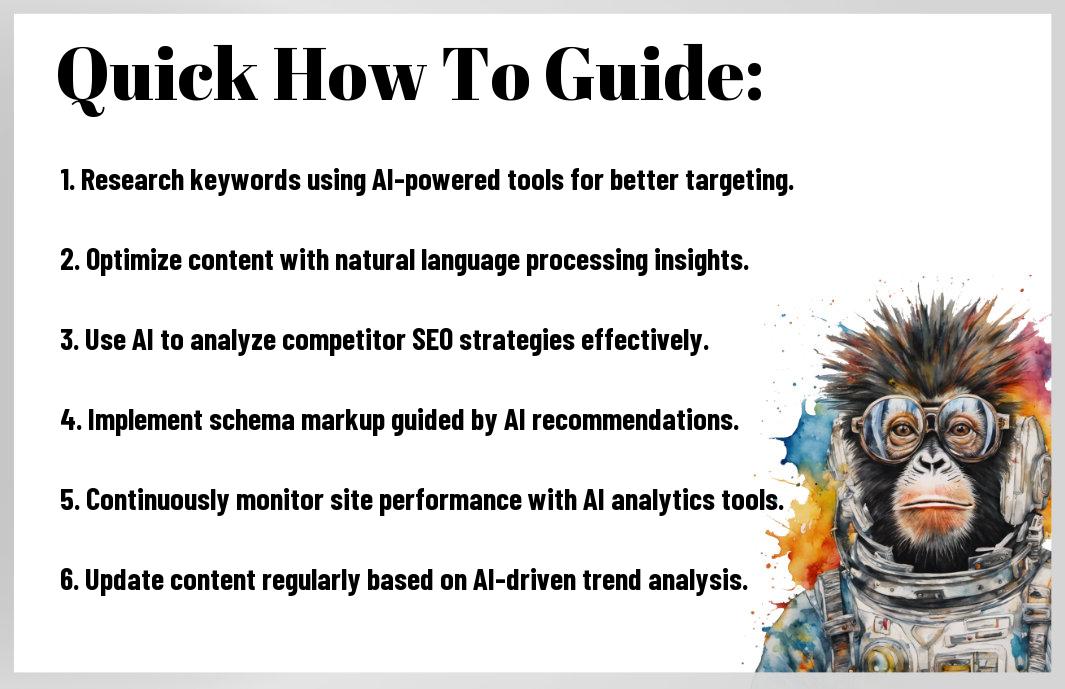
- Incorporate AI tools to analyze keyword trends and optimize content for better search engine rankings.
- Utilize machine learning algorithms for personalized content delivery, enhancing user engagement and satisfaction.
- Regularly assess and update SEO strategies based on analytics and changing algorithm patterns to maintain optimal performance.
Harnessing AI to Decipher Search Intent
Decoding search intent is necessary for targeting the right audience effectively. AI tools can analyze vast amounts of data, determining the motivations and needs behind user queries. By understanding whether users seek information, products, or services, you can tailor your content to address their specific intent, increasing engagement and satisfaction. This refined approach to SEO not only enhances rankings but also fosters a stronger connection with your audience.
Analyzing User Queries with AI Algorithms
AI algorithms excel at dissecting user queries, examining patterns in search behavior to reveal underlying intentions. Using natural language processing (NLP), tools can categorize queries into specific types, such as informational, navigational, or transactional. With data points from hundreds of thousands of searches, these algorithms provide a roadmap for understanding what users truly want, allowing you to adjust your content strategy accordingly.
Mapping Content Strategies to User Needs
Your content strategy should align closely with user needs to maximize relevance. By leveraging AI-powered insights, you can create content that directly addresses the various facets of search intent. Develop specialized content clusters that resonate with specific user needs, ensuring that each piece serves a distinct purpose within your overall narrative.
Exploring mapping content strategies to user needs means entering into user personas and search patterns identified by AI tools. For instance, if data reveals a significant portion of your audience is seeking how-to tutorials, creating in-depth guides on relevant topics not only answers their queries but also positions your site as an authority in that niche. Incorporating keywords that reflect user intent, alongside engaging visual and audio formats, can enrich the user experience, leading to greater dwell time, reduced bounce rates, and higher conversions. Each piece of content should act as a building block, forming a comprehensive user journey that fulfills their needs at every stage.
The Role of Machine Learning in Content Optimization
Machine learning technologies refine your content optimization strategies by analyzing user behavior and search patterns. By utilizing algorithms that learn from data, you can enhance keyword targeting, improve user experience, and ultimately boost organic traffic. For instance, platforms like Google’s RankBrain utilize machine learning to interpret intents behind searches, allowing you to tailor your content more effectively to meet user expectations.
Predicting Content Performance Using AI Models
Leveraging AI models allows you to forecast how well specific pieces of content will perform based on historical data and user engagement metrics. By analyzing factors like click-through rates, time spent on page, and social shares, you gain insights into which topics resonate most with your audience. This predictive capability enables you to focus your resources on the content that is likely to succeed.
Adjusting Strategies Based on AI-Driven Insights
Utilizing insights from AI analytics empowers you to refine your content strategies effectively. You can identify underperforming areas and pivot your approach by focusing on content types or keywords that yield higher engagement. Furthermore, continuously analyzing real-time data allows you to stay ahead of trends and make proactive adjustments, ensuring your strategies remain relevant and impactful.
In practical terms, adjusting strategies based on AI-driven insights means actively responding to data. For example, if analytics show that certain keywords are driving significantly higher traffic than others, you can create more targeted content around those keywords. Utilizing A/B testing alongside AI predictions also enables you to determine which headlines or formats generate the highest conversion rates, ultimately leading to more effective content. This adaptive strategy keeps you aligned with evolving user interests and search engine algorithms, positioning you as a leader in your niche.
Elevating On-Page SEO with AI-Powered Tools
Deploying AI-powered tools can significantly enhance your on-page SEO strategies. These tools not only automate time-consuming tasks but also provide insights that help you create more optimized content tailored to your audience. You can leverage predictive analytics and natural language processing to refine keyword usage and improve overall content quality, ensuring that your pages rank well in search engine results. In a digital landscape where competition is fierce, this innovative approach gives you the edge needed to attract more visitors and convert them into loyal customers.
Automating Meta Tag and Title Generation
Automating your meta tag and title generation streamlines how you optimize your pages for search engines. AI tools can analyze your content and suggest compelling titles and meta descriptions that not only improve click-through rates but also align with search intent. This automation ensures you’re consistently creating well-structured tags that boost your SEO effectiveness without consuming significant time. Moreover, these tools adapt to changing trends, keeping your content relevant in a fast-paced online environment.
Ensuring Semantic Search Compatibility
Semantic search relies on understanding user intent and context, making it necessary for optimizing your content. AI tools can help you identify related keywords and phrases, enabling you to create more comprehensive content that answers broader user queries. By integrating semantic search compatibility into your strategy, you increase the likelihood of appearing in featured snippets and voice search results, both of which are becoming increasingly critical for driving organic traffic.
Understanding semantic search requires you to think beyond just individual keywords. For example, tools like Google’s BERT algorithm improve how search engines grasp the meaning behind queries. By utilizing AI-driven insights, you can uncover long-tail keywords and variations that resonate with user intent. Aim to craft content that answers questions in-depth, incorporates relevant entities, and maintains a natural flow to ensure your pages not only rank higher but also engage users effectively. Consider using structured data to further enhance your content’s discoverability by search engines, allowing for a richer user experience.
Crafting Compelling Backlink Strategies with AI
Backlinks remain a cornerstone of SEO success. By leveraging AI technologies, you can streamline your backlink strategies, identify prime opportunities, and enhance your outreach efforts. AI tools analyze website authority and relevance in real time, ensuring that your backlink profile comprises only the most powerful and trustworthy links. This approach not only boosts your search rankings but also drives organic traffic to your site.
Identifying High-Value Link Opportunities
AI can help pinpoint high-value link opportunities by sifting through vast amounts of data to reveal which websites within your niche have the most influence and relevance. Utilizing tools like Ahrefs or SEMrush, you can discover competitive backlinks, analyze domain authority, and assess page relevance. This data-driven strategy enables you to focus your outreach on websites that merit your attention, maximizing the chances of securing valuable backlinks.
Leveraging AI for Outreach Efficiency
Efficiency in outreach is paramount for successful backlink acquisition. AI-powered tools can automate the process of identifying potential link partners and streamline personalized email campaigns. For example, platforms like Mailshake use AI algorithms to draft engaging outreach emails, boosting your response rates significantly. By segmenting audiences and analyzing their engagement, you can tailor your pitches for increased effectiveness. Additionally, AI tools monitor responses and follow-up reminders—allowing you to maintain a steady outreach rhythm without sacrificing quality or personalization.
To bring extraordinary results, AI-driven outreach can analyze various data points, such as previous communication patterns and interactions, optimizing your approach and timing for follow-ups. By using in-depth analytics, you can also measure the success of your outreach campaigns, tweaking your strategies in real-time based on performance metrics. This focus on adaptability keeps your backlink efforts aligned with ongoing trends, ensuring that your approach is not only effective but also responsive to the ever-evolving digital landscape.
Monitoring and Adapting: Using AI for Continuous SEO Improvement
In today’s fast-paced digital landscape, maintaining a competitive edge requires more than just initial optimization. Continuous monitoring and adaptation through AI-driven strategies is crucial for effective SEO. Utilizing tools for real-time data analysis allows you to stay ahead of trends and adjust your tactics accordingly, ensuring enduring visibility and engagement. For a comprehensive recap on how to do SEO for Generative AI, check out this resource.
Setting Up Real-Time Performance Tracking
Implementing real-time performance tracking is vital for understanding how your SEO strategies are performing. Use AI tools to monitor key metrics such as organic traffic, bounce rates, and conversion rates. Automated alerts can notify you of significant changes, allowing for immediate action when issues arise or opportunities emerge.
Implementing AI-Centric Feedback Loops
Creating AI-centric feedback loops helps optimize your SEO strategies through continuous learning. These loops utilize machine learning algorithms that analyze user interaction data to pinpoint areas needing improvement. As you gather insights from user behavior, you can refine your content and keywords, allowing tailored adjustments that enhance rankings and user experience.
By employing AI-centric feedback loops, you not only refine your SEO tactics but also gain a clearer understanding of your audience’s preferences. Sophisticated AI tools can analyze large data sets to reveal which keywords are gaining traction, which content is resonating, and even shifts in user intent. This insight allows you to forecast trends and adjust your strategy proactively, enhancing your website’s relevance and authority over time. Regularly updating content based on analytics ensures you remain aligned with what your audience is searching for, solidifying your rankings and driving greater engagement.
To wrap up
With this in mind, implementing comprehensive how-to strategies for effective AI SEO techniques can significantly enhance your website’s visibility and performance. By understanding the nuances of AI optimization, focusing on high-quality content, and utilizing data analytics, you can navigate the ever-evolving digital landscape with confidence. Embrace these strategies to not only attract more traffic but also engage your audience more effectively, ultimately driving long-term success for your online presence.
FAQ
Q: What are the basic principles of AI-driven SEO techniques?
A: AI-driven SEO techniques revolve around leveraging machine learning algorithms and data analytics to understand user behavior and optimize content accordingly. Key principles include keyword analysis, content personalization, and predictive analytics. By analyzing patterns in search queries, AI can help marketers identify high-value keywords and optimize their content structure. Personalization involves tailoring content to meet the specific needs of different user segments, enhancing user experience and retention. Predictive analytics allows businesses to anticipate future trends, enabling preemptive strategy adjustments that can improve search visibility.
Q: How can businesses effectively integrate AI tools into their SEO strategy?
A: To effectively integrate AI tools into an SEO strategy, businesses should start by identifying their specific SEO goals and the metrics they wish to impact, such as organic traffic, conversion rates, or keyword rankings. Next, they can implement AI-powered tools that align with these goals, such as content optimization software, keyword research tools, and user behavior analytics platforms. It’s vital to ensure seamless collaboration between AI tools and traditional SEO efforts, utilizing insights from AI to inform content creation and link-building strategies. Regular monitoring and adjustment based on AI-generated insights can amplify the effectiveness of these strategies over time.
Q: What common challenges do companies face when utilizing AI for SEO, and how can they overcome them?
A: Common challenges faced by companies when utilizing AI for SEO include data privacy concerns, integration issues with existing systems, and a steep learning curve for new tools. To overcome data privacy concerns, businesses should ensure compliance with regulations and focus on transparency with their users about data usage. Integration issues can be addressed by conducting thorough research on compatibility and ensuring a well-planned implementation phase. To tackle the learning curve, investing in training sessions and resources will help teams become proficient in using AI tools effectively. Emphasizing a culture of continuous learning and adaptation will also aid in overcoming these obstacles.
Search Here
About us

Talisman Marketing
Casting spells and implementing magic on your marketing plans since 2011
Magic Marketing
Services
Testimonial

"Quality Service"
Always accessible with quality service. Big thanks to Talisman Consulting!
Jeff Ball
Think Local
Gallery


