
Essential How-To Guide For Implementing Smart AI SEO Techniques

Most marketers and business owners understand the importance of optimizing their websites for search engines, but few tap into the full potential of smart AI SEO techniques. By integrating advanced AI tools into your SEO strategy, you can enhance your rankings, boost organic traffic, and stay ahead of the competition. In this guide, you will learn how to effectively implement these techniques to create high-quality content and improve user experience, ultimately transforming your digital presence and driving substantial growth for your business.
Key Takeaways:
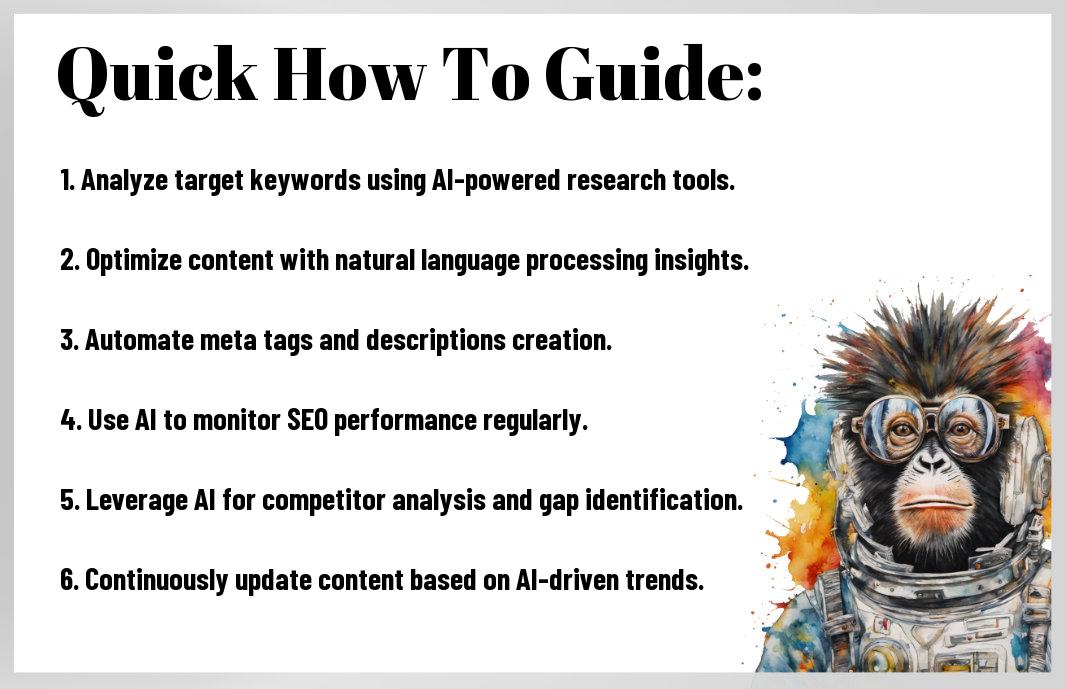
- Utilize AI tools to analyze keywords and user intent for better-targeted content creation.
- Implement automation to streamline on-page SEO tasks, such as meta tag optimization and content updates.
- Leverage data analytics to track performance and adjust strategies for continuous improvement in search rankings.
Crafting an AI-Driven Keyword Strategy
Utilizing AI for keyword strategy allows you to pinpoint valuable search terms that resonate with your audience. The integration of AI-powered tools streamlines the process of finding relevant keywords, helps customize content to target specific demographics, and enhances visibility across search engines. By leveraging sophisticated algorithms, you can discover not only popular keywords but also hidden gems that will give you an edge. Adopting this approach makes your keyword strategy more dynamic and responsive to real-time data shifts, ensuring you stay ahead of your competition.
Uncovering Long-Tail Keywords with AI Tools
Long-tail keywords, often consisting of three or more words, are less competitive and highly targeted. AI tools can analyze search patterns and user behavior to reveal these specific phrases that your audience is likely to use. By focusing on long-tail keywords, you can enhance traffic quality and attract highly relevant visitors who are ready to convert.
Evaluating Keyword Intent for Superior Targeting
Understanding keyword intent helps you align your content with the specific needs and desires of your audience. You can categorize keywords into informational, navigational, transactional, or commercial investigation types. This insight allows you to tailor your content strategy effectively. For instance, targeting transactional keywords such as “buy running shoes online” directs users ready to purchase, while informational keywords like “best running shoes” can nurture potential customers in the research phase. Utilizing AI analytics can further refine your understanding of intent, ensuring your content meets user expectations.
When evaluating keyword intent, analyze user queries using AI-powered software that categorizes terms effectively. Look at SERP features, such as featured snippets, related questions, or local results that indicate what users are seeking. For better targeting, consider high-volume keywords that denote readiness to engage or purchase compared to broader queries. Tools like Google Analytics, SEMrush, and Ahrefs can aid in uncovering these particulars, ultimately allowing you to create content that is specifically aligned with user intent and enhances your overall SEO performance.
Leveraging Data for Content Optimization
Data-driven approaches enhance your content by pinpointing specific elements that resonate with your audience. By utilizing advanced analytics, you can refine your content to match search intent and user behavior, resulting in more effective engagement. Tools powered by AI can evaluate large data sets, offering insights on trending topics, optimal posting times, and keyword opportunities. This strategic application of data not only boosts SEO rankings but also elevates overall content quality, ensuring you attract and retain your target audience.
How to Analyze Top-Performing Content with AI Metrics
Analyzing top-performing content involves leveraging AI metrics like engagement rates, click-through rates, and conversion statistics. These metrics reveal what resonates with your audience, guiding your content strategy. Emphasizing elements such as headlines, visuals, and readability can help replicate success. Utilizing tools such as SEMrush or Ahrefs allows you to dissect this data, providing actionable insights tailored to your niche. With a clear understanding of what works, you can optimize your future content to drive more traffic and engagement.
The Role of AI in Content Gap Analysis
AI plays a pivotal role in conducting content gap analysis by evaluating existing content against competitor offerings and audience expectations. By utilizing AI algorithms, you can uncover topics your audience is searching for that you haven’t yet addressed. For instance, tools like Clearscope analyze keyword performance and suggest relevant subtopics you may be missing. This approach enables you to craft targeted content that fills these gaps, boosting your site’s relevance and authority in search results. Regularly assessing content gaps ensures that your strategy remains aligned with evolving trends and user needs.
Personalization: The New Frontier in SEO
Personalization in SEO has now become a game-changer, allowing you to cater to individual user needs and preferences. By refining your strategies to deliver personalized content, you not only enhance relevance but also improve engagement metrics. AI-driven tools harness vast data to analyze user behavior, thus delivering tailored experiences based on specific interests, leading to higher conversion rates and brand loyalty.
Understanding the Impact of User Behavior on SEO
User behavior significantly influences SEO effectiveness. Data such as click-through rates, bounce rates, and time spent on site reveal insights into your audience’s preferences and satisfaction. For instance, analyzing these metrics helps you determine which keywords attract your target demographic and how to optimize your content accordingly. Incorporating user behavior analytics allows for continuous improvement, ultimately enhancing your search engine rankings.
Implementing AI for Tailored User Experiences
AI enables the creation of highly personalized user experiences that drive engagement and retention. By leveraging machine learning algorithms, you can analyze user data in real time, adjusting recommendations and content to fit their evolving needs. For example, e-commerce sites often implement AI-powered product recommendations based on previous purchases, increasing the likelihood of conversions. Utilizing chatbots and personalized content showcases this technology’s potential to create unique interactions that resonate with visitors.
To effectively implement AI for tailored user experiences, focus on gathering comprehensive data about your users, including demographics, browsing history, and preferences. This information feeds into AI algorithms, which can generate insights about user behavior trends and personal interests. By utilizing tools like dynamic content generation, you can transform your website into a personalized hub for each visitor, significantly enhancing their journey and satisfaction. Maintain an iterative approach to refine your strategies continuously, ensuring that you stay aligned with the ever-changing demands of your audience.
Technical SEO: The Backbone of AI Strategies
Effective technical SEO lays the groundwork for all other AI strategies by ensuring that search engines can crawl, index, and understand your site effortlessly. This foundation includes optimizing site architecture, resolving duplicate content issues, managing backlinks, and implementing structured data markup. Without a strong technical SEO framework, even the best AI-driven content strategies could fall flat, impacting your visibility and reach. Prioritizing technical SEO not only aligns with AI’s data-driven insights but also enhances user experience, promoting longer visits and higher engagement rates.
Utilizing AI for Site Auditing and Error Detection
AI tools streamline the site auditing process by automatically identifying technical errors such as broken links, improperly redirected pages, and missing alt tags. These solutions analyze your website’s structure, providing real-time feedback and actionable insights that help you prioritize fixes based on their impact on user experience and search rankings. Leveraging AI for auditing allows you to maintain optimal site health, ensuring a seamless user journey and maximizing your site’s visibility in search engine results.
Enhancing Page Speed and Mobile Optimization with AI
Improved page speed and mobile optimization are fundamental to boosting your SEO performance, and AI plays a pivotal role in achieving both. Utilizing smart algorithms, AI-driven tools analyze your site’s loading times and identify elements that hinder performance, such as large images or script bloat. Moreover, AI can assist in optimizing responsive designs, ensuring that your site adapts impeccably to different screen sizes, which is important given that over 50% of global web traffic now originates from mobile devices.
AI tools go beyond surface-level analyses, providing in-depth recommendations tailored to your specific content and audience. For instance, optimizing image file sizes through AI can reduce load times by up to 70%. Additionally, AI can suggest adaptive layouts that enhance usability on mobile devices, which in turn increases retention and conversion rates. By harnessing AI’s predictive capabilities, you can implement solutions to enhance loading speeds and mobile responsiveness proactively, staying ahead of the curve in an increasingly mobile-first world.
The Future of Backlink Strategies through AI
As AI continues to evolve, backlink strategies are transforming significantly. Advanced algorithms are increasingly focusing on the quality of links, rather than just quantity. This shift encourages organic link-building efforts that prioritize relationships and relevancy, rather than manipulative tactics. Employing AI tools can streamline this process and help you stay ahead of trends. For more insights, check out How to Get the Most Out of Your AI-Powered SEO Strategy.
Identifying and Nurturing Valuable Link Partnerships
Fostering relationships with websites that align with your brand can yield high-quality backlinks. By leveraging AI analytics tools, you can identify potential partners based on shared interests and audience demographics. These technologies help you evaluate link domains, authority, and relevancy, ensuring your backlink profile remains robust and effective.
Automating Outreach with AI Solutions
AI solutions can dramatically improve your outreach efforts, saving you valuable time and enhancing your success rate. Automated systems intelligently craft personalized messages and manage large-scale outreach campaigns, allowing you to engage with numerous potential link partners simultaneously. This scalability can boost your link acquisition efforts without sacrificing quality.
Implementing automated outreach through AI means utilizing tools that analyze previous interactions and tailor your communications for maximum impact. For example, AI-driven software can assess a website’s previous responses to outreach and adapt your messaging accordingly. This not only increases the likelihood of positive responses but also makes the entire process more efficient. In an era where time is of the essence, leveraging these advanced solutions can help you build a more dynamic backlink strategy and stay ahead of your competitors.
Summing up
Drawing together the insights from this necessary guide, you are now equipped to implement smart AI SEO techniques that can elevate your online presence. By leveraging data-driven strategies and user-centric approaches, you can enhance your content’s visibility and relevance. Embracing these modern tools will not only improve your search engine rankings but also foster deeper connections with your audience. As you move forward, continuously analyze and adapt your strategies to stay ahead in the ever-evolving landscape of digital marketing.
Q: What are the basic steps to get started with implementing AI in SEO strategies?
A: To begin implementing AI in your SEO strategies, start by identifying your current SEO practices and areas for improvement. Next, research various AI SEO tools that can automate tasks such as keyword research, content creation, and performance analysis. Choose a tool that aligns with your goals and integrate it into your workflows. Additionally, keep up with the latest trends in AI technology and SEO to ensure your strategies remain relevant and effective. Finally, continuously monitor your results to refine your approach based on data-driven insights.
Q: How can AI improve keyword research and content optimization?
A: AI enhances keyword research and content optimization by analyzing vast amounts of data to identify trending topics, search volume, and user intent. With AI-powered tools, you can generate relevant keywords and phrases that resonate with your target audience. Moreover, these tools can evaluate your existing content, suggesting improvements such as added keywords, structure optimization, and readability enhancements. By leveraging AI, you can create more targeted, high-quality content that is likely to rank better in search engine results.
Q: What are some common pitfalls to avoid when using AI in SEO?
A: When using AI in SEO, it’s important to avoid over-reliance on automation without human oversight, as automated processes can overlook nuances in content quality and relevance. Additionally, be cautious of using generic keyword strategies suggested by AI without tailoring them to your specific audience. It’s also vital to continuously analyze the performance of your AI-driven strategies, as blindly trusting the technology without adjustments can lead to missed opportunities. Ensure that your implementation of AI balances efficiency with creativity and human insight.
Search Here
About us

Talisman Marketing
Casting spells and implementing magic on your marketing plans since 2011
Magic Marketing
Services
Testimonial

"Quality Service"
Always accessible with quality service. Big thanks to Talisman Consulting!
Jeff Ball
Think Local
Gallery


