
Strategic How-To Guide For Integrating AI SEO Techniques Into Your Workflow

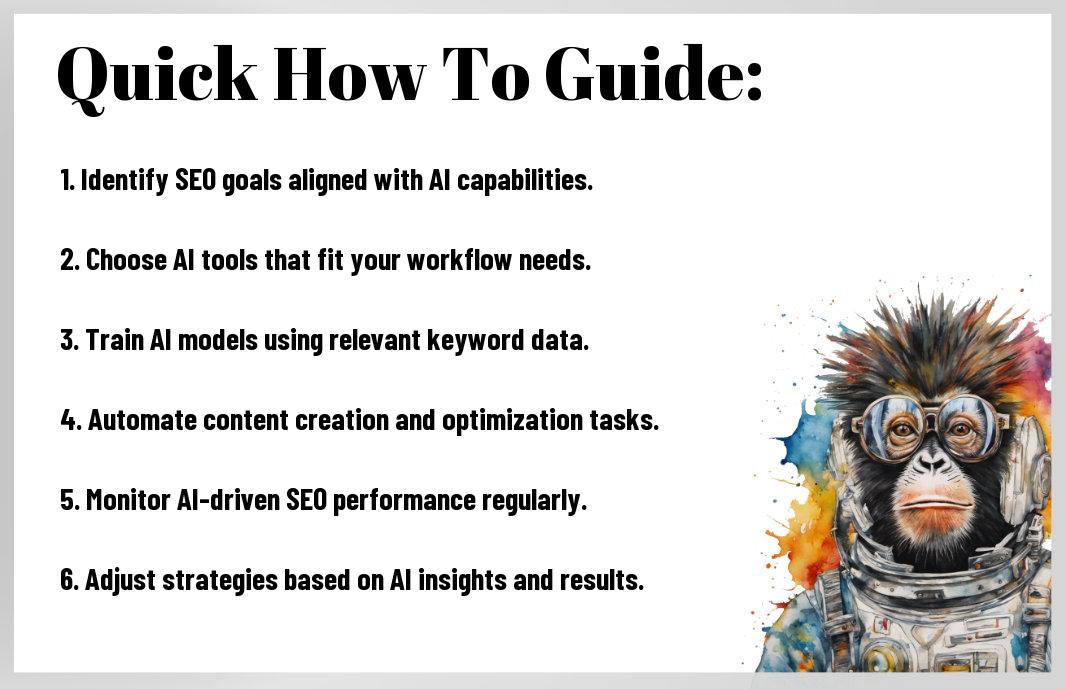
There’s a powerful shift happening in the world of digital marketing, and you need to be at the forefront by integrating AI SEO techniques into your workflow. As search engine algorithms evolve, leveraging artificial intelligence can help you optimize your content more effectively than ever, driving targeted traffic and improving your online visibility. This guide will walk you through actionable steps to seamlessly incorporate AI tools, enhancing your strategy and making your workflow more efficient. Get ready to unlock the full potential of your SEO efforts.
Key Takeaways:
- Leverage AI tools to conduct data-driven keyword research and content optimization, enhancing your SEO strategies.
- Implement AI-driven analytics for real-time insights on user behavior and content performance, allowing for continuous improvement of your SEO efforts.
- Integrate AI-generated content suggestions into your workflow to streamline the creation process while ensuring high-quality, relevant material for your audience.
Reframing Your SEO Mindset to Embrace AI
Adapting to an AI-driven SEO landscape necessitates a significant mindset shift. You must see AI not just as a tool, but as a vital partner in optimizing your strategies. This requires embracing automation, predictive analytics, and machine learning to enhance your approach to search engine visibility. Your focus should center on leveraging data insights and real-time metrics to inform your content creation and optimization efforts, streamlining your workflow and maximizing results.
The Shift from Traditional SEO to AI-Powered Strategies
Traditional SEO methods often relied on guesswork and static strategies, whereas AI-powered approaches utilize dynamic algorithms to adapt to user behavior and search patterns. By integrating AI, you can analyze vast datasets rapidly, identifying trends and opportunities that traditional methodologies would miss. Understanding that these AI techniques can evaluate on-page SEO elements, user intent, and even competitor strategies empowers you to refine your tactics continuously.
Recognizing Opportunities in AI for Enhanced Visibility
AI offers a treasure trove of opportunities for improving your online visibility. By utilizing AI-driven tools, you can uncover valuable insights about user preferences, which enable you to create more relevant content. Additionally, algorithms can predict shifting trends, giving you the chance to act ahead of the competition. This proactive approach empowers you to adapt your strategies based on real-time data, ensuring your SEO efforts align perfectly with user expectations.
For instance, Google’s RankBrain uses machine learning to understand the context of search queries better, rewarding content that genuinely addresses user needs. Leveraging AI analytics, you can identify which keywords are trending within your niche, allowing you to create content that resonates with your audience. Tools like Clearscope or MarketMuse analyze high-ranking pages, providing insights on topics and keywords that can elevate your content. With AI, pinpointing these opportunities becomes more straightforward, ultimately leading to increased traffic and higher rankings.
Integrating AI Tools for Keyword Research and Analysis
Utilizing AI tools for keyword research accelerates your ability to uncover valuable insights that can enhance your SEO strategy. These advanced technologies analyze vast data sets, allowing you to identify both obvious and long-tail keywords that might be overlooked. By automating the tedious aspects of keyword analysis, your workflow becomes smoother, enabling you to focus on crafting high-quality content that resonates with your audience.
Selecting the Right AI Software for Your Needs
Choosing the appropriate AI software involves evaluating your specific goals, budget, and the integration capabilities of various tools. Options like Ahrefs, SEMrush, and Moz provide different sets of features and price points. Consider tools that not only offer keyword generation but also insight into search volume, competition level, and content gaps to ensure you make informed decisions based on trustworthy data.
Leveraging Machine Learning for Predictive Keyword Trends
Machine learning algorithms sift through historical search data to predict future keyword performance, giving you a strategic edge. By analyzing patterns in user behavior, these algorithms can forecast which keywords are likely to gain traction, allowing you to stay ahead of the curve. Predictive analytics can highlight emerging topics in your industry, enabling you to create content that captures audience interest before the competition.
For instance, platforms like Google Trends utilize machine learning to showcase rising search terms based on current events, seasonal shifts, and geographical preferences. By integrating this data into your SEO strategy, you can proactively tailor your content and optimize your site for terms that are likely to surge in popularity. This not only supports effective content planning but also enhances your overall visibility and authority in search engine results pages (SERPs) as you consistently align with evolving user intentions.
Crafting Content with AI: Balancing Automation and Authenticity
Utilizing AI in your content creation process can significantly enhance efficiency while maintaining quality. The key lies in balancing computational capabilities with your unique voice. Focus on integrating tools that support your creative vision without overshadowing the authenticity of your message. For a detailed exploration of this synergy, check out How To Use AI In Your Content Strategy: A Guide.
Achieving Creativity with AI-Assisted Writing Tools
Incorporating AI-assisted writing tools can unleash unprecedented levels of creativity in your workflow. These platforms offer suggestions, help you brainstorm ideas, and even develop outlines based on input parameters you provide. This collaborative approach fosters innovation while saving you hours of effort on initial drafts.
Maintaining Your Brand Voice in an Automated World
Your brand voice is your identity in the crowded digital landscape and must remain consistent, even when adopting AI technologies. Set clear guidelines that define your tone, style, and vocabulary, ensuring that AI tools are customized to emulate this essence. Integrating AI should enhance your brand, not dilute its unique characteristics.
To maintain your brand voice, consider creating a comprehensive content style guide that outlines your preferences in language, humor, and structure. This resource can now serve as a reference for AI algorithms, enabling them to generate text that aligns with your established voice. Regularly reviewing AI-generated content against your guidelines will also help you fine-tune the balance between automation and authenticity, allowing you to leverage the efficiency of AI while delivering engaging and recognizable content to your audience.
Optimizing On-Page SEO Using AI Insights
Leveraging AI for on-page SEO can Transform your content strategy by providing data-driven insights that refine keyword usage, meta descriptions, and headers. Tools such as natural language processing (NLP) can analyze existing content to highlight opportunities for improvement, making it easier to align with user search intent. By continuously integrating these insights into your workflow, you enhance your site’s visibility and increase organic traffic efficiently.
Utilizing AI for Real-Time Performance Metrics
AI tools can track your web pages’ performance metrics in real time, allowing you to adapt strategies quickly when necessary. With features like click-through rates, bounce rates, and average time on page, you gain an in-depth understanding of how your content resonates with users. This dynamic feedback loop enables you to make informed adjustments and ultimately improve your rankings.
Enhancing User Experience with Personalized AI Recommendations
Implementing AI-driven recommendations can significantly enhance user experience by tailoring content to individual preferences. By analyzing user behavior and patterns, AI systems can suggest relevant articles, products, or services, which leads to increased engagement and lower bounce rates. These personalized touchpoints not only build a connection with your audience but also drive conversions, creating a win-win scenario for both users and your business.
As you explore AI-driven recommendations, consider deploying machine learning algorithms that analyze user demographics, browsing history, and purchase patterns. By utilizing these insights, you can deliver more relevant content suggestions that meet users’ specific interests, ultimately resulting in a more engaging experience. For instance, if a visitor frequently searches for fitness-related articles, presenting personalized content such as tailored workout plans or nutrition tips will capture their attention and keep them returning for more. These enhancements contribute to better SEO performance as search engines increasingly prioritize user experience in their algorithms.
Building a Data-Driven Strategy to Measure Success
Your journey towards successful AI SEO integration begins with a robust framework for measuring outcomes. Utilize analytical tools to capture traffic, conversion rates, and engagement metrics, allowing you to clearly gauge the effectiveness of your strategies. Aggregating this data will reveal patterns and insights that can drive refinement for your work, ultimately aligning your AI efforts with business goals.
Setting Key Performance Indicators for AI Integration
Define specific Key Performance Indicators (KPIs) that reflect your integration efforts and organizational objectives. Metrics such as organic traffic growth, click-through rates, and time spent on pages will provide tangible evidence of your AI-driven strategies’ performance. Align these KPIs with business goals to ensure that every data point serves a purpose in your overall strategy.
Iterating and Improving Your Strategy Based on AI Analytics
Use AI analytics to continuously refine your SEO approaches. Regularly reviewing and analyzing the data not only highlights what works but also uncovers areas for improvement. Testing different strategies, measuring the outcomes, and applying insights will help iterate your processes for better results.
For example, consider a recent study where companies adopted AI-driven insights to tweak their content placement and keyword strategy. Within three months, they reported an average of 30% increase in engagement rates and a 25% boost in organic traffic. By dedicating time to analyze the AI reports, you can identify underperforming keywords and content gaps, enabling strategic pivots that resonate more with your audience. Continually adapting your tactics based on real-time AI analytics ensures your strategy remains relevant and effective in the ever-evolving SEO landscape.
Welcome to the Future: Preparing for AI-Evolution in SEO
The landscape of SEO is shifting rapidly with the integration of artificial intelligence technologies, meaning you need to evolve alongside these changes. Current studies indicate that over 60% of marketers are already using AI tools for content creation, optimization, and analytics. Familiarize yourself with frameworks like GPT and other machine learning algorithms, which can predict user behavior and preferences through data patterns. By adopting AI-driven tools such as Google’s RankBrain or AI-powered analytic software, you can gain insight into customer behaviors, streamline your campaigns, and improve your search rankings with remarkable precision.
Q: What are the key AI SEO techniques that I should integrate into my workflow?
A: Some of the key AI SEO techniques to consider incorporating include natural language processing (NLP) for content optimization, machine learning algorithms for predictive analytics, and AI-driven tools for keyword research and analysis. Utilizing AI-based tools can help in analyzing user behavior patterns, optimizing for search intent, and automating repetitive tasks like content updates. This integration allows for more efficient data analysis and can significantly improve your website’s ranking and visibility.
Q: How can I effectively implement AI SEO tools into my existing content creation process?
A: To effectively implement AI SEO tools into your existing content creation process, begin by selecting compatible tools that align with your current workflow. Start with an AI keyword research tool to identify relevant keywords and phrases that your target audience is searching for. Incorporate these keywords into your content strategy while also utilizing AI content generation tools to assist with drafting and optimizing content. Continuously analyze the performance of your content through AI analytics tools, allowing you to refine your approach over time based on data-driven insights.
Q: What challenges might I face while integrating AI SEO techniques, and how can I overcome them?
A: Some challenges that may arise during the integration of AI SEO techniques include a steep learning curve in understanding how to utilize AI tools effectively, potential resistance from team members unfamiliar with AI technologies, and ensuring data privacy and security. To overcome these challenges, consider providing training sessions for your team to familiarize them with new tools and technologies. Gradually implement AI techniques to allow for adjustment and understanding, and always prioritize data compliance to safeguard user information and maintain trust.
Search Here
About us

Talisman Marketing
Casting spells and implementing magic on your marketing plans since 2011
Magic Marketing
Services
Testimonial

"Quality Service"
Always accessible with quality service. Big thanks to Talisman Consulting!
Jeff Ball
Think Local
Gallery


